Mid-Februray Free Write

Let me just cut to the chase. I have been busy taking classes and reading. Work has always been the same and I am also taking the time to go to the gym. I will also mention that I have been making the best of efforts to change my diet. Much of this takes up large amounts of time and yet, I still manage to find time to do things like see my awesome girlfriend for a weekend. I am very proud of myself.

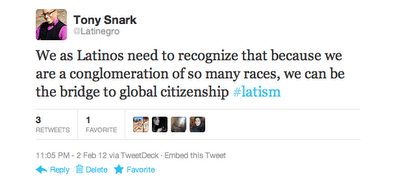
Which brings me to this free writing type of update. While I have not written in a while, I have been busy making sure that Afro-Latinos have a voice this month. On Twitter, there was a broad discussion about 2 weeks ago hosted by #latism. The subject was the racial mosaic that is Latinos. I am glad to have been apart of that because the timing seemed to be right for me to be interviewed by Voxxi. It is not all the time that I get to interviewed by an online magazine.

Then, Team @beingafrolatino was invited as guests on the Vanessa Oden Show which is a internet radio show based out of Oakland, California. Along with fellow co-founder, Bianca, we talked about Afro Latino identity and how other people view us. The show was so successful that we did a part 2 this past Monday where we talked more about the Trans-Atlantic Slave Trade. In these instances there are so many things to talk about that you cannot begin to squeeze into 2 one hour shows. I was told that the podcasts for those shows will be available soon and once that comes out I will share it.

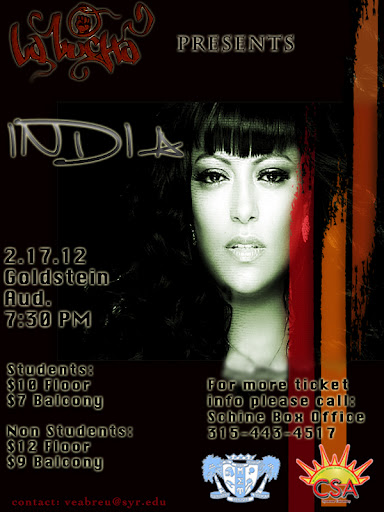
I am also excited to be able to see yet another Salsa Artist come to Syracuse University. One of the groups that I advise called La LUCHA manage to get enough funding to bring up India! This is yet another thing that I have on my plate in my on going quest to promote Latinos. I want to point out here that while I champion the cause of Afro Latinos, I still consider myself to first and foremost a Latino. We all share the same culture although I cannot say the same about social standing within the community.

I also feel that there is just not enough hours in the day to do everything I want to do. The problem with not making anymore excuses is that free time becomes limited. The reading from this class alone takes up so much time that I can barely watch television. While that is not a bad thing, it just amazes me how I can just forget to watch shows that I am normally used to. I can say thank goodness for the DVR but I barely watch that either because I have so much to read.

Black History X: The Bird Cage

I laugh. I laugh at the ignorance of others and realize that at some point the American Education System has failed so many. I laugh because my sarcasm just does not cover the range of things that I could say to people who just do not know their history nor do they know what goes on around them. This is not limited to the young people in this country either.

What am I talking about? Is Black History Month the issue? Maybe it is and maybe it isn’t but my issue is that ignorance is not constrained to just one month. It becomes prevalent as we get close to and into months like this. This really is a month of reflection on where we have been and where we are going. Instead, I feel we live in a world where people actually believe that racism is not an issue anymore. I am not even talking about white people.

I understand that most white people do not understand the intricate system of oppression. I get that they do not see white privilege. I see why they do not understand the black and white paradigm or why the color blind ideology is negative. I expect the responses from them because they are raised in a world that is made for them. But what about our people? What about Black and Latinos who have been white washed to believe that racism is a distant memory that they see in black and white news reels where they see black people being hosed by firefighters in the south?

I have often talked about the color blind Latinos. This is nothing new. The whole idea being lighter skinned in the Caribbean and South America is to obtain a high social standing. We have pretty much the same thing here in the United States when it comes to how black women are viewed. The concept of beauty is to be as light as possible (and as skinny as possible). African Americans should not feel that because Obama is President that we have gone through great strides in “solving” Racism.

On the contrary, racism is at the heart of the issue in the GOP political debates. While it is not being directly said, let’s think about the tone of things being said and what we are willing to let people get away with. Newt Gingrich, who is known to say bigoted things, can come out and say that “Spanish is the language of the Ghetto” and where is the uproar? Sure, Newt will say that Mitt Romney fabricated such a statement which begs the question, even if Mitt did, how is this ok to even lie about?

I can use tons of examples of how Newt views the working poor (who are seen as black), but the one thing that is my absolute favorite is how Mitt Romney is now considered Latino. We as proud Latinos are so eager to claim anyone and of course we should because most Latinos are just as prejudiced against African Americans as white people.

What gets me is that most people don’t see the things that are blatantly in front of them, which brings me the the Birdcage Analogy.  A few years ago I read an article by Marilyn Frye called “Oppression.” In this article she talks about the oppression that women endure by the hands of men. I have often believed that if one group of people are oppressed then we all are. Even though she focuses primarily on women her Birdcage Analogy fits racial oppression very well:

Consider a birdcage. If you look very closely at just one wire in the cage, you cannot see the other wires. If your conception of what is before you is determined by this myopic focus, you could look at that one wire, up and down the length of it, and be unable to see why a bird would not just fly around the wire any time it wanted to go somewhere. Furthermore, even if, one day at a time, you myopically inspected each wire, you still could not see why a bird would have trouble going past the wires to get anywhere. There is no physical property of any one wire, nothing that the closest scrutiny could discover, that will reveal how a bird could be inhibited or harmed by it except in the most accidental way. It is only when you step back, stop looking at the wires one by one, microscopically, and take a macroscopic view of the whole cage, that you can see why the bird does not go anywhere; and then you will see it in a moment. It will require no great subtlety of mental powers. It is perfectly obvious that the bird is surrounded by a network of systematically related barriers, none one of which would be the least hindrance to its flight, but which, by their relations to each other, are as confining as the solid walls of a dungeon.

Grasp the power of this analogy and realize who the bird in the cage is. There needs to be a general understanding of the system of oppression in this country that is not limited to just people of color. When you do not see the wires of the cage then you do not realize that you are trapped. Like the bird, people think everything is ok in their world and automatically resist the urge to step away from it. Kinda sounds like The Matrix, huh?

It is only when you can step back and see the cage or the system as whole do you realize the grand scheme of it all. The only way to see the entire birdcage is to educate ourselves to these things. Let’s not forget the people who own the birdcage are apart of that system. They may not see it that way because the system has been that way for years and they are just doing and benefiting from such a system for centuries that they have no idea that it even is a cage.

I get tired of the unwillingness to understand the need for Black History Month by hearing such a question like, “Why is there no White History Month?” Very simple. Every month is White History Month. The fact we even have to be given a mere month to keep the masses aware that Black people did contribute to this country is just another part of the wire in the cage. Just like when the Tea party wants to ban any mention of the founding fathers having slaves from History Books because it gives a negative view on them. Perhaps the fact that Arizona can ban Mexican Studies should suggest that many people wish to have a color blind education. The funny thing about being color blind is that you see no color but we are are Black and you cannot hide that.

No More Excuses.

My Year in Review

It seems like when we get to the end of every year we talk about how fast this year went. It makes me wonder what everyone else is doing because the last few years have been anything but fast. This past year is no exception and I am okay with that. I feel like I had too many losses this year, however, the successes that I did have outweigh all of that.
I started out the year figuring that I knew what I was doing. I made some resolutions that did not come into fruition. I started on what I felt was a great path into grad school. I chose to put all my eggs in one basket and put in my application to Sarah Lawrence. The Application process included bios, transcripts, and recommendations that lead to my ultimate failure. I am not sure why I was not accepted but I took it all in stride.
This year I gained some friends and I lost some friends and in some cases I regained some only to lose them again. It was not a particularly easy year for me in the friend department. I wonder if I have been misunderstood in certain cases or perhaps I cannot be friends with every woman I meet. There is no coincidence that I lost most of them when my girlfriend came into the picture. Some things can’t be helped eventhough I believe that some friendships are repairable. I do realize I need to do more for my friends in the future.
There have been some affiliations that I very happy to be a part of. The November Media Group made me take my name and my persona on this blog seriously enough to consider myself a brand. So I did a photo shoot in March in order to have some head shots for publicity later. I thought this was a good investment and I am not opposed to doing this again in the future, it was indeed a great experience. Another affiliation that I am really proud of is The LatiNegr@s Project: Being AfroLatino. I was able to bring to together 3 other individuals to form a teams that is completely committed to education of the Afro Latino experience. Together we can do more than I ever could through our sites and on twitter.

Speaking of Twitter, it was a big year for me tweeting. I was able to get a company like Pep Boys to hear my gripes about them and their service. I finally met Frankie Negron when he came to Syracuse University to perform for Fiesta Latina. The best part of this was when I picked him up from the airport and the first thing he says to me is….”You look just like your Twitter pic!” He is an awesome dude and I hope I get to work with him again. I was also nominated for a LATISM (Latinos in Social Media)  Best Latin@ Micro-Blogger award. I didn’t win but it was nice to just be nominated.

I also found what it meant to be truly single. I never really got into what my life has been since the divorce but it is not cake walk. Sure, I may have hinted at things here and there but those who have been through a divorce know that struggle becomes synonymous with surviving a broken marriage. I am not even referring to the institution of marriage, I am talking about dealing with people always asking about your ex-wife because somehow they are the last person in the world to know. There is also the fact that bill collectors give zero fucks that divorce happens.
Being truly single means most of those things you hear about bachelor life that has not been glorified. The fast food diet, the single man laundry day (thank God I do not use a trash bag to carry my clothes), the unshaven beard, the piled up dishes, and other things I wont get into because this is a family show. Needless to say being a divorcee is not a fashion statement and I have learned to deal with everything and to be as open and honest about things as I can be. Surviving a life that was once a two income life is a challenge when it become one. After a full year, I can say that I am a proud survivor.
My truly single days did not last long when I started seeing my girlfriend in July. This is the woman that I wrote all that poetry about. While I will not go into detail about this whole thing since I do enjoy a bit of privacy when it comes to this part of my life, I will say that things are going better than I would have ever imagined. I always take time to reflect and realize that I am a different person than i was years ago and will continue to learn from my past mistakes in relationships
The job prospects always seem bright when they appear, especially since I completed my 10th year at SU. I made it a habit to look at all the job openings I can find each Sunday. I was so confident that I would find a job this year that I bought two suits from Men’s Warehouse not only for work but for some potential interviews I had lined up. In June, I had two interviews with Yeshiva University in Washington Heights. This was following a phone interview I had several weeks before. I was 90% sure this was going to happen. I kept it quiet because the whole thing with Sarah Lawrence made my parents believe that not everyone is on my side and can toss negativity out there into the universe. Needless to say, It did not work out at Yeshiva and neither did it work on at Columbia University when I interviewed there in November. 
Overall, I wanted to write more and complain less. There seems to be a surge in popularity of this blog that I am humbled by. I look at the stats and page views only to see that this year has given me more hits than ever before. In fact, November has been my most popular month. Much of it seems to be past posts that have led to me getting paid a small amount of money for something that I wrote 5 months ago.
More importantly, I still maintained the ability to be creative through either poetry or writing a short story. I am still committed to pointing out racism and injustice where I can, as well as calling out men or boys out on their crap and showing the world the true colors of people or magazines. I look forward to year 3 of this blog as I try to expand myself as a brand and as a writer. 

Team @BeingAfroLatino

I always find it interesting when putting a team of individuals together. I feel like I am forming the Justice League which makes the little nerd in me smile. But, I do not think that I am too far off from this. Team @BeingAfroLatino is all about justice. We have banded together from our corners of the internet to promote Afro Latinos.

We are of the mind set that neither of us can educate alone. All of us on this team believe that alone we can only reach just a few people, but together we can be extraordinary. So when we formed, it was out of the belief that @beingafrolatino was bigger than all of us. Over that last few months we have been working together on twitter and over tumblr to educated awareness and show the injustices of discrimination. I think it is about time that I formally introduce us all:

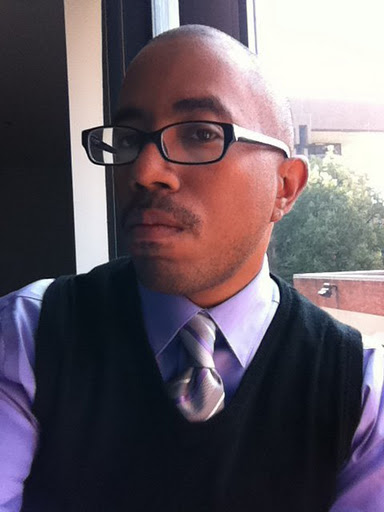
Anthony Otero is Puerto Rican and Ecuadorian that was born and raised in the Bronx, NY and currently a staff member at Syracuse University. He is one of the co-founders of The LatiNegr@s Project. A constant writer, he is currently working on his first book of poetry called “My Twisted Life Through Lines of Poetry” set to come out in 2012 and created the blog Inside My Head.

As one of few Latino administrators at Syracuse University, he become an adviser to many Latino students and Latino student organizations. Anthony also helped create the Latino Heritage Month celebrations that still occur today. He took graduate courses in Cultural Foundations of Education and finally understood that what it means to be Afro-Latino after soul searching through research papers. This sparked the creation of all his blogs including the newly retitled Tumblr site: Black, Brown, and a little Mestizo. He also created the @beingafrolatino twitter account as a way to promote and unite Afro Latinos.

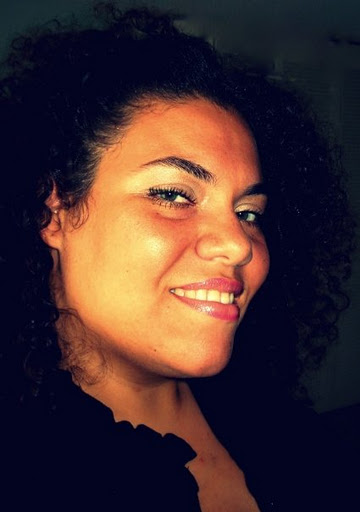
Bianca I. Laureano is a first generation Puerto Rican sexologist living in NYC. Raised in the Washington, DC area in an activist environment, Bianca is the daughter of an artist and educator and a product of the public school system. In the field of sexuality for over a decade, Bianca has worked with and taught youth of Color, working class communities, speaks at national and international organizations advocating sex-positive social justice agendas. She has presented both locally and internationally on various topics concerning activism, Latino sexual health, feminisms, youth and hip-hop culture, Latinos and race, Caribbean cultural practices and sexuality, dating and relationships, curriculum development, reproductive justice and teaching.

She’s a board member at the Black Girl Project, doula with The Doula Project, co-founder of The LatiNegr@s Project, and Monster Girl. Bianca is an instructor and a freelance writer and was awarded the 2010 Mujeres Destacadas’ Award (distinguished woman) from El Diario/La Prensa for her work in sexual health. She hosts the website LatinoSexuality.com and identifies as a LatiNegra, media maker, radical woman of Color, activist, sex-positive, pro-choice femme. Find out more about Bianca by visiting her website BiancaLaureano.com.

Violeta Donawa is a Detroit native, born to a Panamanian father and African American mother. As a doctoral student, she examines racial ideologies and paradigms, as well as the impact of social media on identification processes. She has two publications, entitled, “Exploring the Afro-Latino Presence: The Afro-Panamanian Experience in Michigan” in the journal, Negritud: Revista De Estudios Afro-Latinoamericanos and “Defining and Documenting Afro-Latin America” in the journal, Latin American and Caribbean Ethnic Studies.

Raising visibility of the AfroLatin@ community has always been a passion. She has found multiple ways to integrate this passion into her everyday life through academia and social media. As a freelance writer and emerging blogger, she has contributed to the Voices from Our America ™ project, volunteered with The AfroLatin@ Forum, written for www.vidaafrolatina.com, and runs her blog La Republica de Detroit

Kismet Nuñez is a black and Puerto Rican woman of color insurgent who deploys 21st century forms of art, autobiography, and performance against the discursive terrain of race, sex and personality. With the help of new media, Kismet breaks herself into pieces to become more than her parts in a revolutionary act of defiance, affirmation & self-care. Kismet is a blogger, writer, student, teacher, researcher, historian, fangirl, lover, sister, daughter and everything in between. In 2008, she founded iwannalive productions, a social media collective specializing in radical black gyrl media, political education, sex positive empowerment and complete and utter disruption of the archive, academy and hu-MAN-ity as we known and understand it. iwannalive productions manages #AntiJemimas, a social media performance project.

Begun in 2010 out of an earlier blog project exploring self love (and hate) titled Self Care: Revise, Revise, Revise, the #AntiJemimas project is about infinite literacies, multiple beings and the conundrum of trying to build a real black gyrl in a world of 21st century digital engagement. The project’s goal is to circumvent the oppressive power of the iconic that traps woc bodies, sexualities and genders into roles labeled Only or Never. Today, #AntiJemimas has evolved into an online universe of blogs, Tumblrs and Twitters committed to the very hard work of building a real gyrl of color in a world of new media. You can find Kismet fomenting rebellion at Zora Walker, making gris-gris in the WOC Survival Kit, living on a distant star as the Sable Fan Gyrl, stroking her thighs as Pretty Magnolia, or twiddling her thumbs on Twitter. Kismet also blogs at Nuñez Daughter, the base blog for #AntiJemimas. Founded in May 2008, Nunez Daughter is an experiment in digital autobiography and archive. It expands on thoughts formulated in a research paper titled, “‘I’m On to You:’ Troubling Performances of Race, Gender and Class.” 

We are Team Being Afro-Latino. You can follow on Twitter or on Tumblr. Buckle your seat belts, it will an exciting ride.

Massacre Day

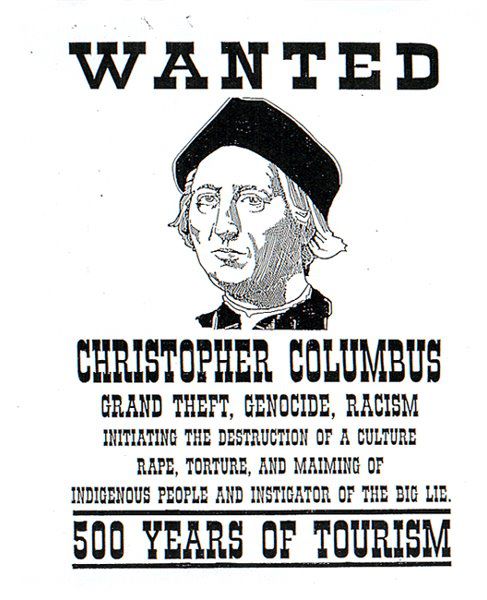
I find it interesting that I have not written about this until now. Perhaps I wasn’t prepared in the best way to really voice my opinion on Columbus Day. Over the past years, I haven’t given the attention that it needed. I usually just ignored it all together because there is no reason to celebrate such a day. However, while learning about things from Black in Latin America, I realize that this day should be addressed on this blog.

Lets talk about this often romanticized word called discovery. A dictionary defines discover as “to be the first, or the first of one’s group or kind, to find, learn of, or observe.” Christopher Columbus is talked about as this explorer that discovered the free world. I wont talk about how he got lost or that he thought he found the other side of China, but I will talk about how he wasn’t the first to the free world. That is not to claim that someone else, like the Vikings as an example, beat him to this. It means the simple fact that no one can discover a place that is already inhabited.

To believe that he discovered something means that one would subscribe to the European-Anglo version on the world. That leads me to the second definition of discover, “to learn about for the first time in one’s experience.” This is the state of history being shown from Anglo side. This was a new thing for Spain at that time. Clearly this was a discovery to them. It is very much like when an astronomer finds a new planet. It is new to them, but just because you find a penny on the floor does not mean you discovered money.

From the way it was explained to me in High School, today is very much a celebrated day. There was no mention of the subjection. There was no mention of the massacre that ensued. Absolutely no mention of the raping and the pillaging of a people that were deemed worthless. History books often show that Native Americans were on the opposite side. They are viewed in history as the people that Americans had to defend their livelihood against and making it seem that peace treaties were made to maintain a very delicate peace that was consistently broken.

Columbus day is constant reminder to those, like me, who “discovered” the truth about this day. One could say that this day was created by the establishment as a subliminal message to those who were and are victims of Colonial Imperialism. I recently heard the term Post Traumatic Slave Syndrome which deals with the mentality of always thinking, as people of color, we are not worth anything. The images of what we were and what we are only make us self destructive. So is there a similar term for Native Americans? Post Traumatic Columbus Syndrome perhaps? I am not yet versed in these terms.

I call this day what it is, Massacre Day. That may be a tad harsh for some people but I think I am being very generous with this title. I could have called it Genocide Day, or Rape a Heathen Day, or Give Small Pox to a Native day.  Please understand, when talking about the effect of Columbus in the new world there has to be that knowledge that entire peoples were wiped away. Their histories are gone and for the most part, can never be told. These are people that are, quite potentially, my ancestors.

More importantly, I bring this up as a constant reminder to those people who talk enough garbage about  “Homeland Security” and the protection of our borders from illegals. Mexicans were here before any of were here as well. The Manifest Destiny gave people this notion that we as “Americans” own this land and should push the natives as far as we can from it. Of course, now, the land belong to the corporations but that is another blog post.

Discovery is a big word and like most words in the dictionary, most people have very little concept of what it means. Sure Columbus found something that was new to him and his side of the world and yes it was a big deal. He was the reason why two land masses are now connected, but at what cost? I often wondered if my teachers in grammar school knew the truth about this day. Were they forced to just stick to the book? It is our responsibility to teach both sides of History so that we understand where we have been and where we are going.

LHM: Black in Latin America – Dominicans/Haitians

Out of all the four documentaries in this series, I knew this one would be the most popular. In this series, this place called Hispaniola or Quisqueya is the only place that two cultures are compared in such a way. Black in Latin America: Haiti and the Dominican Republic is billed as the story of one culture in denial and the other in love with its independence.

I was so excited about this workshop, which was last Saturday, that I invited a very special guest, Dr. Silvio Torres-Saillant. He is the intellectual that appears in the 13th minute of the episode. Dr. Torres-Saillant is a professor at Syracuse University that always amazes me with his intellect. The other person with this particular subject was fellow blogger and SU Alum, Jose Vilson who lives in both worlds being Haitian and Dominican. I figured I had my bases covered. Little did I know that Dr. Torres-Saillant was about to bring it.

First the highlights:

  • The people of Hispaniola have shared the island for over Five Thousand Years
  • Hispaniola was the first place to import African as Slaves.
  • Dominicans are proud to a mixed raced society and Haitians are proud to be black.
  • Santo Domingo was founded in 1496 by Bartholomew Columbus.
  • Most Dominicans consider themselves Inido.
  • The motherland for Dominican Republic is considered Spain
  • Sambos represent what being black means.
  • One of the first sugar plantations was in the Americas was in Nagua.
  • Sugar production did not last long in Santo Domingo within Century the production was centered around Brasil. Cattle Ranching became means to survival
  • Cattle Ranching plantation worked differently than other plantations due to the nature of the work. The master/slave dynamic was different. There was almost an equal footing.
  • The collapse of the Sugar Industry lead many whites to leave Santo Domingo. This left people of color to basically fend for themselves. They maintained loyalty to Spain.
  • There are some musical customs that contain African Roots and have been around for 500 years.
  • Haiti occupied Santo Domingo in 1822
  • The Haitian government had a profound effect on the Dominicans such as trying to change the language from Spanish to French and making changes to religious practices.
  • The Dominican Republic gained independence on February 27, 1844
  • Dominicans reject everything that was considered Haitian, including, in many ways, their skin color.
  • Dominican elite tended to “whitetify” historical figures if they were too black.
  • Years later, Haitians become migrant workers who did jobs that Dominicans would not do. This gave many Dominicans the notion that they were in a higher class than the Haitians. The imported tens of thousands of Haitians.
  • Blackness became a Haitian trait and a negative term in the D.R.
  • Rafael Leonidas Trujillo was a dictator who did more to harm relations between the people on the island than any propaganda or slanted education did. He declared Santo Domingo to be a white nation and hid his own dark features. 

At this point the documentary begins to focus on the Massacre River and how over 15 thousand Haitians were slaughtered there. So to expand on this point I simply looked it up. Dr. Gates mention this happening in October of 1937, which is true, but the event itself was across the island and lasted a week.

Trujillo did order what is known as the Parsley Massacre or, in the Dominican Republic, as El Corte (The Cutting), in which the Dominican Army killed Haitians living on the Dominican side of the border. They massacred 17,000 − 35,000 Haitians between October 2 and October 8 of 1937. To avoid leaving evidence of the Army’s involvement, the soldiers used machetes rather than bullets. The soldiers of Trujillo were said to have interrogated anyone with dark skin, using the shibboleth perejil (parsley) to tell Haitians from Dominicans when necessary; the ‘r’ of perejil was of difficult pronunciation for Haitians. (I got this from Wikipedia)

This fact alone was not thoroughly explained in this episode and becomes a unique point with Dr. Silvio Torres-Saillant. He explained that although he enjoyed this episode and being a part of it, there is only so much history of a country that can be explain within an hour (24 minutes for the Dominican Republic to be exact). He goes on to explain that he Dr. Gates had a story to tell which slants this view of Dominicans not wanting to be black thus making Haiti this proud race of people. Dr. Torres-Saillant makes evidence of this when he points out that Dr. Gates refers to the Haitians in having a “extraordinary rich and noble history.”

Before I continue, I need to mention that we did watch the entire episode. Due to time constraints and the point I want to make here I wont go into the Haitian side of the story because quite frankly, it was not discussed largely because we talk more about the racial views of the Dominican Republic. Of course I talk about being amazed by this episode and how it shows racial views as how we know it. Jose Vilson comments about his own struggle of racial identity before being comfortable with the term Afro Latino. However, it was Dr. Torres-Saillant that made everyone in the room what to read more about the extraordinary rich and noble history of Santo Domingo.

Now where in the documentary does it state about the numerous rebellions of the Dominicans Slaves. He begin to explain about the first major slave revolt in the Americas occurred in Santo Domingo during 1522. He talked about how many of the slaves managed to escape to the mountains where they formed independent maroon communities. This was something that I did not know. I was floored by this. Dr. Torres-Saillant said he mentioned this to Dr. Gates, but this was not included in the episode.

It comes down to this, and this is a summarization, it is not whether or not Dominicans say they are black or not. They know that come from Africa. It is in the culture. It is in the religion. It is in the music. There is a part about about voodoo being practiced in Haiti, but many of those same things are also practiced by Dominicans in very similar ways like we saw in Cuba. Dr. Torres-Saillant points out that he is not interested in what people say but rather he is interested in what people do. Dominicans do black things. However, it is a type of “black” they are rejecting. They are rejecting the negative types of black that has been instilled in them.

When I had a chance to talk to Dr. Torres-Saillant afterward, I mentioned to him that although I am not Dominican, it seems that my family rejects this notion of blackness too. I told him how my grandmother once told me I should not date a black woman. He is response was eerily similar to my fathers. He said to me that it is not an issue of weather your family is racist, it is more the fact that image of blacks in this country is so bad, she doesn’t view you in the negative way that black people are being portrayed.

He then gets technical and says that in reality we are all the same. Skin color is based on the human body’s need to adapt to different conditions around the world. Culture is what people really fight about but they connect culture with skin color in America. Black is not viewed in the Dominican Republic or even in the Caribbean the same way it is viewed in the United States. It is only when you are forced to identify yourself do you reject or accept the choice given to you. That made me realize something else, this episode never talks about American influence in Santo Domingo. Trujillo was an American backed dictator… again, very similar story to Cuba.

Yes, Haiti was the first black independent commonwealth in the Americas and it is very inspiring to many black people, but this idea that Dominicans just accepted the assimilation of the European ways is completely false. More importantly, the 22 year rule of Santo Domingo by Haiti give many Dominicans this notions that the two people were completely different. In realty, two sides of the same country split in half by two different ruling countries sparked divides that exist today.
LHM: Black in Latin America – Cuba

As I mentioned earlier in the month, I am hosting four workshops on the PBS series called Black in Latin America.  This was a documentary that was ground breaking in the way it showed the rich history of Afro Latinos in the Caribbean and South America. Last night, I hosted the first. I showed the the episodes on Cuba and although the audience was small, it was well received. For those who did not see it :

I took some notes of interest that stuck out in my mind when viewing this. These we also discussed when the viewing was done.

  • Cuba received over a million slaves from Africa. That is double the amount than the United States
  • The Haitian Revolution caused a shortage in sugar production in which forced Cuba to fill thee gap that lead to hundreds of thousands of slaves being shipped in order to meet demand. Whites feared a possible revolution in Cuba and because of this, plantations were operated like prisions.
  • By 1825, all of Spain’s colonies were independent with the exception of Puerto Rico and Cuba. The sugar industry was too profitable for Spain to lose
  • Carlos Manuel de Cespedes made the “Grito de Yara” on October 10, 1868. He declared his slaves free and this started a 10 year war.
  • Antonio Maceo and Jose Marti believes in a Cuba for Cubans and the Spain was trying to break Cuban unity by making race an issue in war.
  • Cuba abolished Slavery in 1886, 21 years after the United States

The documentary does not get too much into the Spanish American War. But it it interesting to point out the United States influences when it comes to racial policy. That can be seen with political cartoons of Cuba being defined as the “black child” of the United States.

It was at the mid way point when showing this documentary that students really got into this. When we wrapped it up, there was a mention that this type of information is not readily available. How else could they learn this information because history class is certainly not providing that.

  • Pedro Yvonnet and Evaristo Estonez (not mentioned) formed the Independent party of Color in 1908. This lead to the Cuban governmant massacring 3000 Afro Cubans in 1912 when they staged a revolt.
  • Son was considered black music and thus declared illegal but was declared a legal in 1925 by President Machado
  • The Cuban Revolution was on 1 January 1959, when a rebellion army lead by Fidel Castro overthrew the US-backed Cuban dictator Fulgencio Batista. The wars lasted 5 years. (much of this detail is not mentioned)
  • Castro declared Cuba to be free of Racism.

There is was a lot of talk after the viewing that Castro is viewed as this evil man, yet healthcare and education is free to everyone in Cuba. He made it a point to wipe out illiteracy as best he could. However, the USA has view of him as an evil dictator who aligned with the USSR when the embargo was placed on them. It is, of course, a matter of perception. It is no secret that Castro’s revolution lead to many White Cubans leaving the island and migrating to Miami.

  • The collapse of the Soviet Union lead to the loss of 6 Billion Dollars to the Cuban economy. That is about 80% of trade and over 50% of the GDP. This loss of money made racial inequality glaringly obvious.
  • Money from abroad (families in Miami send money to families in Cuba) is one reason for racial divide. The other is the currency: the peso vs the CUC.

It has always been my belief that Cuba has always been a racist country. One person int he documentary points out “Prejudice never went away in Cuba, it was just pushed under the table”. The reality in Cuba is the more class issue that has race written all over it. It just so happens that the rich are White and the poor are Black (as it oftens is).

Another thing that was discussed was Hip Hop in Cuba. It is very interesting that music of “Black” people can be under a certain type of scrutiny. I view Hip Hop to be just like Son in because it speaks to the poor and underrepresented.

I enjoyed showing this episode and will be showing another one this Saturday. I expect a larger crowd as we view and discuss Haiti and the Dominican Republic.

Latino Heritage Month 2011

It has taken me more time than I am willing to admit to decide whether or not to do another Latino Blog Challenge. The problem is that I haven’t been able to come up with 30 new topics. Not to mention that I am more busy this year as opposed to last year. What I do intend on doing is to post strictly on Latino Heritage related things during this month. This may not be a challenge, but I intend on writing about what I learned this month as well as the various things that are happening at Syracuse University.

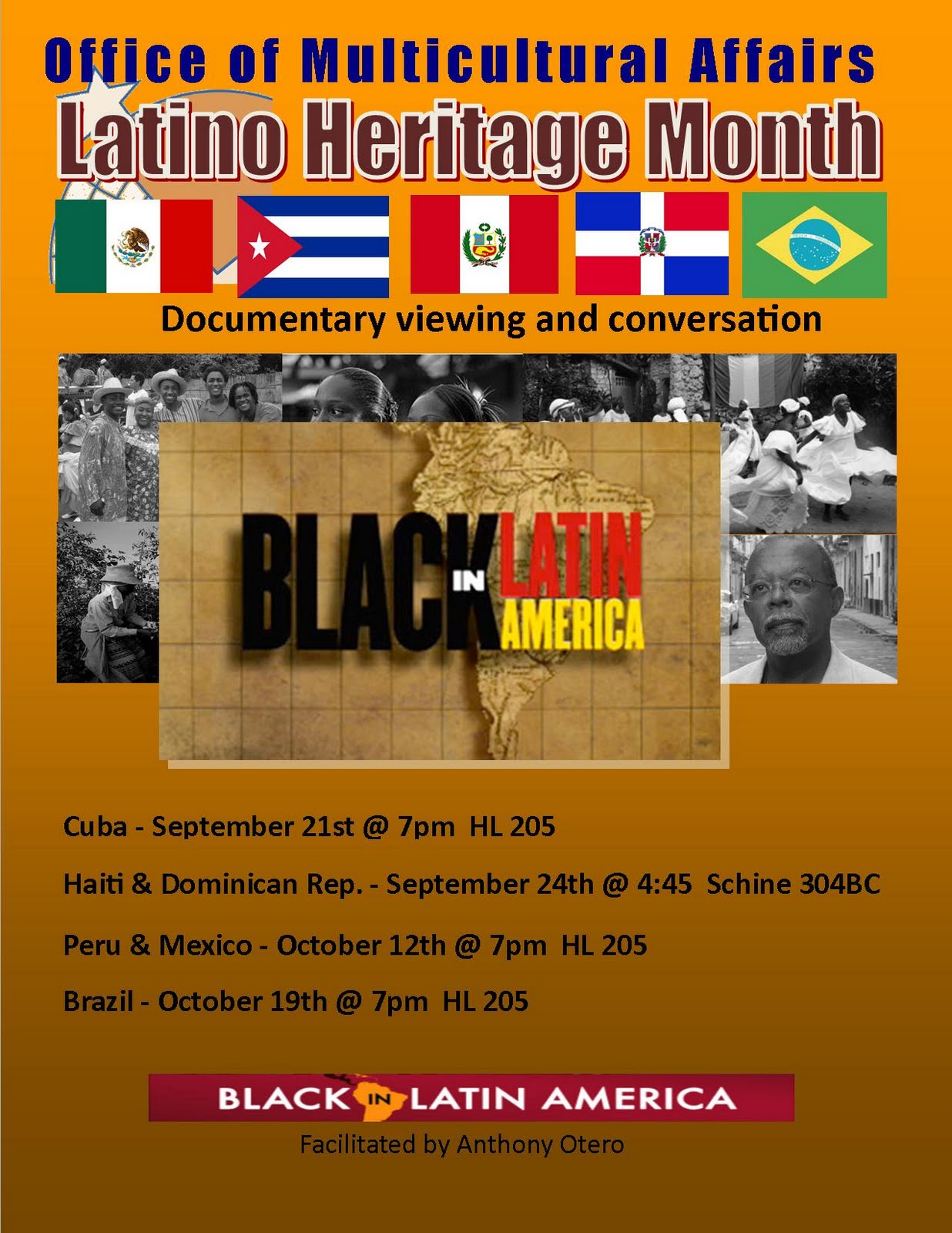
First and foremost, I am facilitating four workshops on the PBS documentary Black in Latin America. This was a phenomenal documentary that aired last spring which brought to light many things. I posted a blog about Peru in particular. The workshops are basically viewing each episode and then having a conversation afterwards. I will pose some critical questions about each to engage the audience. The flyer above is something that I want to remember because I do not get a chance to do things like this very often.

I am happy that I do get this opportunity because last year I contributed to this month by being the keynote speaker at Utica and it should only be right that I do something at the very school I work for this year. But this is not the only thing that I am involved with this year. I have been working hard to promote Fiesta Latina coming up on September 23 with our featured guest, Frank Negron. I remember about 2 years ago he came up to a festival that the city of Syracuse was having and he rocked the place out. I had tweeted him if he would be interested ever coming back to play for the University and he said he would. That started the ball rolling in terms of trying to get the funds and the planning down. I am excited that he is performing at the Schine Student Center. He will be our biggest Salsa artist to date on this campus.

This year we have two commemorative speakers that I had the pleasure of selecting. The first is a very good friend of mine Carmen Mojica. She has guessed blogged here before and she currently has two books out. One is Hija de Mi Madre and the other is Odas de la Mujer de Miel. I would suggest everyone support her and her writings. I am looking forward to her lecture. The other woman is Michele Carlo, author of Fish out of Aqua. I read this book in March and it is fantastic, so much so that I needed her to talk about her experiences as a Latina growing in New York City. I will do a book review in the upcoming weeks.

Finally, I am beginning my Being Afro Latino Project. I announced this on my tumblr account. The first stage is looking for a few people who are willing to help with posting on the on that blog as well as on the twitter account. I have come to realize that two people (me and Bianca) cannot represent all Afro Latinos in our works. Opening it up to people is the best way to go. So the message is this: 

Are you interesting in being a contributor to the Being Afro Latino Project? We are looking for intelligent and willing volunteers to post various pictures and articles on the Latineg@s Tumblr account as well at the @BeingAfroLatino Twitter account. If you are interested leave us an inbox message stating why you think you would be a great asset to the team!

This will be a good month! 

El Hombre (Negro) Araña – The Afro Latino Spiderman

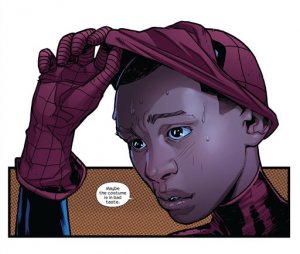
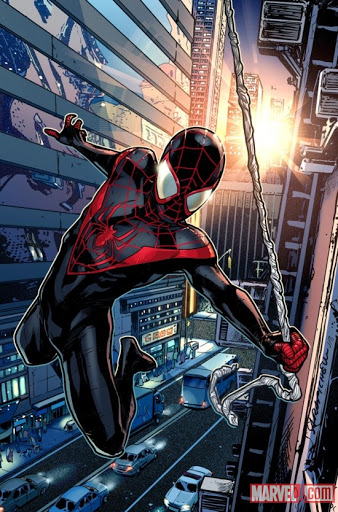
Interesting news in the world of Superheros. Marvel Comics has announced that there is a new Spider-man. I would say the black Spiderman but we have already seen that. This a whole new multicultural Spider-man. This is Miles Morales, half African American and half Latino. Before people can get all excited or upset about this, please realize this is a part of Marvel’s “Ultimate” line of comics. This is not the actual Spider-man that we have come to know over the years, this is an alternative reality of sorts.

The Ultimate line is more of the real life version of Marvel. Imagine what would happen if Superheros did exist. It is a brilliant way to sell books and stories. It is so successful that when you look at movies like Captain America and Iron Man, you can see how they have adopted themes (i.e. The Black Nick Fury). So, it is not too much of a surprise to me that something like this would happen. This “real life version” of Marvel has always been a refreshing look at superheros. However, they are still behind the curve with moves like these.

John Stewart

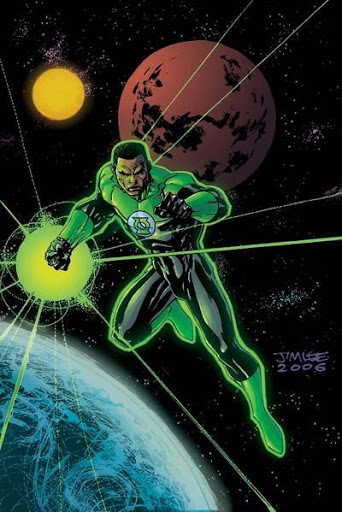
DC Comics has made similar moves in the past to stir readership and promote Multiculturalism. The difference is that this isn’t in a ‘alternate’ universe. John Stewart is almost as popular a Green Lantern as Hal Jordan. His first appearance was in 1972 and yes it was temporary but in 1984 he played a more prominent role. He never left the DC consciousness since playing major roles in the Justice League animated series in 2001. I will also mention how DC changed a semi-popular Firestorm to a black character in 2004 that sparked some animosity amongst older fans. I am personally a fan of Firestorm since childhood and I was ok with this change. They also made a change to the Blue Beetle in 2006 making him Latino.

The room for change in comic books is there. Many people have argued why change a white character into another character of color? The basis is perhaps if these companies made original characters that were African American or Latino then perhaps readership would be sparked in that way. While I think that sounds simple, I do not see the average white person buying the adventures of “El Guapo”. However, a coalition of African American writers, including the late Dwayne Mcduffie, had made great strides with his creation of Milestone Comics in the early 90’s that featured predominately Black Superheros such as a well known teenaged hero called “Static Shock.” DC has purchased this company and had integrated them within the continuity.

The New Spiderman!

Marvel’s move is indeed courageous. I think that having a Mixed Race (which is what this is being deemed as) or Afro Latino Superhero is great for youth and new readership. It gives a sense of being able to put yourself in the shoes of hero if you can see yourself represented. Of course there is a small uproar some of it positive and some not so positive. What I am concerned with is the idea that the writer (Brain Michael Bendis) is not ruling out the fact that Miles Morales may be gay.  While, I am not against the concept of gay superheros I think in this case, it is too much. Making him homosexual as well is like wrapping up all the under represented people into one costume. Marvel may shrink the readership from those who originally identified themselves as being in the shoes of the new Spider-man.

The other problem I have is more of a consistent stereo type of Latino males being gay. I think that goes beyond Marvel Comics, but it is still something that I see consistent in images and roles being played on television. I think about Oscar in The Office, he is the only Latino in the show and of course he is a homosexual. I think it is becoming a pattern in which the once Macho Latino Male was portrayed as the hot latin lover is now becoming the emasculated gay guy in mainstream television.

Northstar:
Marvel’s 1st
Gay Superhero

Before anyone can bark at me and say that there are no homosexual superheros, I will say that there are several in both DC and Marvel Comics. The list is quite extensive actually and in my opinion I think it is quite impressive. I wont get into detail about it but if you want more information you can check this out. I am very impressed on how far comic books have come form the days of my youth. Many of these things seem to be unheard of just 20 years ago. As a matter of fact, there was indeed a gay marriage in a popular comic book.

In any case, it should be interesting to see how this all plays out. The Ultimate Spiderman #1 comes out in September and quite frankly, I cannot wait. It shows that there is some recognition that we are moving into a more global society. I love this quote from Marvel’s editor in chief, Axel Alonso:

What you have is a Spider-Man for the 21st century who’s reflective of our culture and diversity. We think that readers will fall in love with Miles Morales the same way they fell in love with Peter Parker.

I hope the world is ready for the New Spiderman because he is coming. The envelope is being pushed it just am matter of how far it can go.

The Birth of @BeingAfroLatino

There are times in which we all have to make our mark in whatever fashion we choose. I, for one, believe that we all find our passions in the things we love to do. I love to write and it is with that I know I can have my voice heard on a platform that I choose. Of course, I choose to use this blog as my platform for a range of things that I am passionate about. As we all know one of the things that I strive to do is to promote awareness of Afro Latinos.

So it may come to no surprise that I have recently created a Twitter account called: @beingafrolatino. This takes me beyond my normal twitter realm of @latinegro to something that is much larger than me. With this brand new twitter account I can help raise awareness better than with my very own handle. The reason for this is that I have help. In the past, I have teamed up with @BiancaLaureano to start the Latinegr@s Project. This only made sense to have her help and link my newly created twitter account with the Latinegr@s blog. This ensures that Afro Latinos have some voice on some corner of the Internet. Not to say they do not exist, but most of those voices are scattered.

Of course, the question to be raised by some is that other people may feel slighted by this new creation. Being Latino is movement that was started a few years ago by guy named Lance Rios who had a vision to unite Latinos over the Internet. I have seen this vision from the twitter account @beinglatino to the Facebook page and now the blog. There are numerous amounts of people who volunteer to make this movement a force and I think that that is awesome. I would say that there is no reason to feel slighted because @beingafrolatino has a different vision that will not interfere or compete with @beinglatino.

Afro Latinos seems to be the unknown factor these days. There are documentaries this year that will show how difficult is being a black person in a Latin country can be. Black in Latin America has given us all a glimpse of what that looks like, but the upcoming AFROLATINOS: The Untaught Story is rumored to give us unfiltered look we have never seen before. With that being said, we all have so much to learn since history books in the country fail to tell us all we need to know. I am concerned that Latinos in particular feel that denying their African ancestry is acceptable.

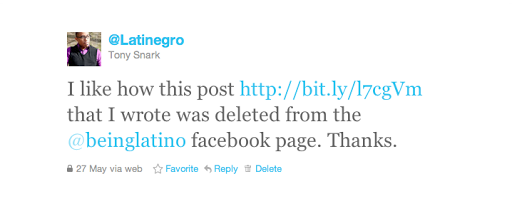
With that being said, last week there was an incident that sparked off this whole issue. I wrote about my disgust for Peru and its treat of their Black population. Often times, when I write something that I feel is important for other people to know, I will make the extra effort to promote. One of those things is to post my blog on the Being Latino Facebook page. This is something that I have done before so imagine my surprise when it was deleted. I check about 5 times to make sure that I was not legitimately buggin out.

So, I sat and thought about this. I was not happy about it and decided to take it to Twitter and Facebook and called out Being Latino. I wanted to know why they decided to delete my post. Now, before I continue, let me just say that issue is already resolved. The responses to this notion on Twitter alone were unexpected. I didn’t expect people to tell me how they felt about @beinglatino. Apparently, there were many people who felt that this was not a surprise bases on the content of my blog. I got the same type of affirmation on Facebook. There was almost a universal feel that Afro Latinos were not represented.

I started to think that I needed to create a space that would funnel the type of information that would help spread awareness of Afro Latinos. I made it a point not to criticize Being Latino or Lance. But, he responded he told me that it was their policy to not have another blog besides their own on their Facebook page. That is a policy that I totally understand and will adhere to. My point was that this policy was not posted anywhere on their page (and as of this writing…still isn’t). People are allowed to post articles and promotional stuff that has to do with Latinos, but not other blogs (even though I saw one when I was just on their page).

I know that I upset him for the controversy but as we all know that Latinos can be very emotional when it comes to things they are passionate about. At the end of the day, he offered me a contributing writer position for Being Latino, in which I accepted. However, I think that creating the @beingafrolatino account will create the type of awareness that I cannot do alone. I will need help as this may become bigger than me.