Latinegr@s Project: Zoe Saldana

Zoe Saldaña smiles while answering a question

The last two profiles that I submitted for this project were of people who passed and while that is ok, I would like to show some Afro Latinos that are alive and well. I mentioned previously that media plays a pivotal role on how Latinos are portrayed. So, I decided to highlight one of the few Afro Latina making some waves in Hollywood at that would be Zoe Saldana.

Zoe Saldana was originally born as Zoe Yadira Zaldaña Nazario and is Puerto Rican and Dominican. After living in Queens for 10 years, her parents to decided to move the Dominican Republic where Zoe resided for seven years. During her time there, she was enrolled in to the ECOS Espacio de Danza Dance Academy, which a very prestigious dance school. She learned various forms of dance but specialized in Ballet.

Her family moved back to New York when she was 17. Her dancing skills caught her much attention when she became apart of the Faces theater troupe. Zoe was recruited by a talent agency that helped her land her first movie role in the film Centerstage (2000), where she played a head strong dancer Eva Rodriguez.

Since then she has landed a few roles in tv shows like Law and Order and starred in movies such as: Drumline, Pirates of the Caribbean: The Curse of the Black Pearl, The Terminal, and Vantage Point (to name a few). However, her popularity skyrocketed when she starred in Star Trek as Nyota Uhura. This particular role landed her in the mainstream of Hollywood. The role that she is currently famous is Neytiri in the film Avatar, which is now the largest grossing film of all time.

I am impressed with her because she has not forgotten where she comes from. Looking back at some of her roles, she does play a Latina. It will be interesting to see what turns her career will make. She is fluent in both English and Spanish and I while I am quite certain you may never see her in a Novela, I would in fact like to see if she can incorporate her Puerto Rican/Dominican heritage in any of her future films.

As of this blog post she has 3 films in post production that are set to come out in 2010 and will soon be filming a sequal to Star Trek set to come out in 2012. Currently, Zoe is spending her efforts in raising money for the victims of the earthquake in Haiti.

Please remember to visit: http://lati-negros.tumblr.com/
Latinegr@s Project: Dr. José Celso Barbosa

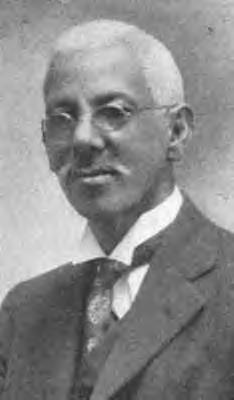
Today’s Project highlight was actually a suggestion from one of my followers that I have met on Twitter. She had suggested that I look up the name: Dr. José Barbosa. What made me happy about today’s highlight is that this is the true nature of the project. I do invite more communal involvement because I am not sure we will get to everyone we want to this month.

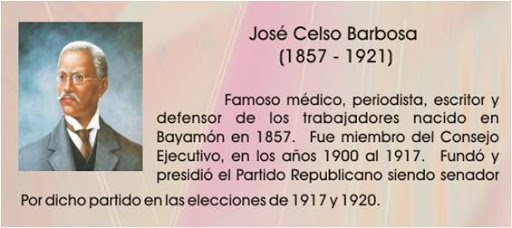
Dr. José Barbosa (1857-1921) was a citizen of Bayamón, Puerto Rico who moved to the United States in search for a better education. Notably he graduated with a medical degree from the University of Michigan and was the valedictorian of the class of 1880. Taking the knowledge that he learned, he moved back to Bayamón and opened his own practice.

Dr. Barbosa was the first native born Puerto Rican to have a medical degree from the United States and that was not an easy thing to deal with. The Spanish government did not recognize his medical degree because it was not acquired through a university in Europe. It took the intervention of the American Consul for Barbosa to be recognized as a legitimate physician.

Barbosa’s work in the medical field became well known across the island. He became a proponent of employee based health benefits, which at the time was not really hard of. This was a very early start to health insurance in Puerto Rico

After the Spanish American war, Dr. Barbosa formed the Puerto Rican Republican Party. This was a political party the was for idea that Puerto Rico should become the next state of America. In 1900 he was appointed to The Executive Cabinet of the United States by President William McKinley. Finally in 1907, he created the first bilingual publication on the island called El Tiempo.

Dr. José Barbosa died on September 21, 1921. Since then Puerto Rico has declared July 27 an official holiday. His residence has been converted into a Museum as well. One thing that I did notice in my research of Dr. Barbosa is the fact that many Republicans are proud to consider him a conservative, which he indeed was. Many also refer to him as the father of the Pro Statehood movement that still exists today.

Please remember to visit: http://lati-negros.tumblr.com/
Latinegr@s Project: A Fluid Identity

I am pleased with the responses that we are getting for the Latinegr@s project. I think that it is a good start to something I know I have wanted to do personally. However, I feel that we are the tip of the iceberg here. The posts that we are receiving are amazing indeed but even I begin to struggle a bit on what or whom to highlight.

It is not the lack of trying or the lack of influential people, it is the simple fact that there is so much information and it is very hard to know where to begin. I would hope that the images are long lasting that we never forget those who are considered to be invisible. Many Afro-Latinos are indeed invisible in today’s world and that is part of the reason why this project has life. Our identities as Latinos are a fluid one. We can fall into many different racial and ethnic categories and yet still identify as Latino or Hispanic.

As children, in the United States, we are indoctrinated with the belief that there is a black and white binary. While we never fully understand it until we are adults, there is an underlying sense that it is better to have a lighter skin tone. American history often demonstrates the superiority of one racial group over another within the white and black context. What is not taught in school, but is often learned, is the inequality within people of color. African Americans face this issue when dealing with different shades of black and the distinction of bi-racial and multi-racial categories. Many African American scholars point to the creation of such categories as “not wanting to be white”. However, this kind of problem goes unsaid within the Latino culture.

Latinos face a very real crisis of identity in the United States of America. The Black and White Binary paradigm in this country places everyone based on skin color into those two categories. Because this paradigm is indoctrinated into all of us, we are forced to describe people of all racial groups within the terms of black and white. This widespread thinking almost puts Latinos on the outside of that binary. This unnatural marginalization of people of color outside of the paradigm forces many to choose what part of the binary they fall into. More often than not the, choice is made for them.

Latinos can be described as a “hybrid category” within the black and white binary, specifically because white and black simply do not apply. Much like my family, Latinos represent every shade of skin color possible. Having another category would assume that were a third race and thus a paradigm shift. However, a large segment of Latinos would rather consider themselves to be white and completely deny their African heritage.

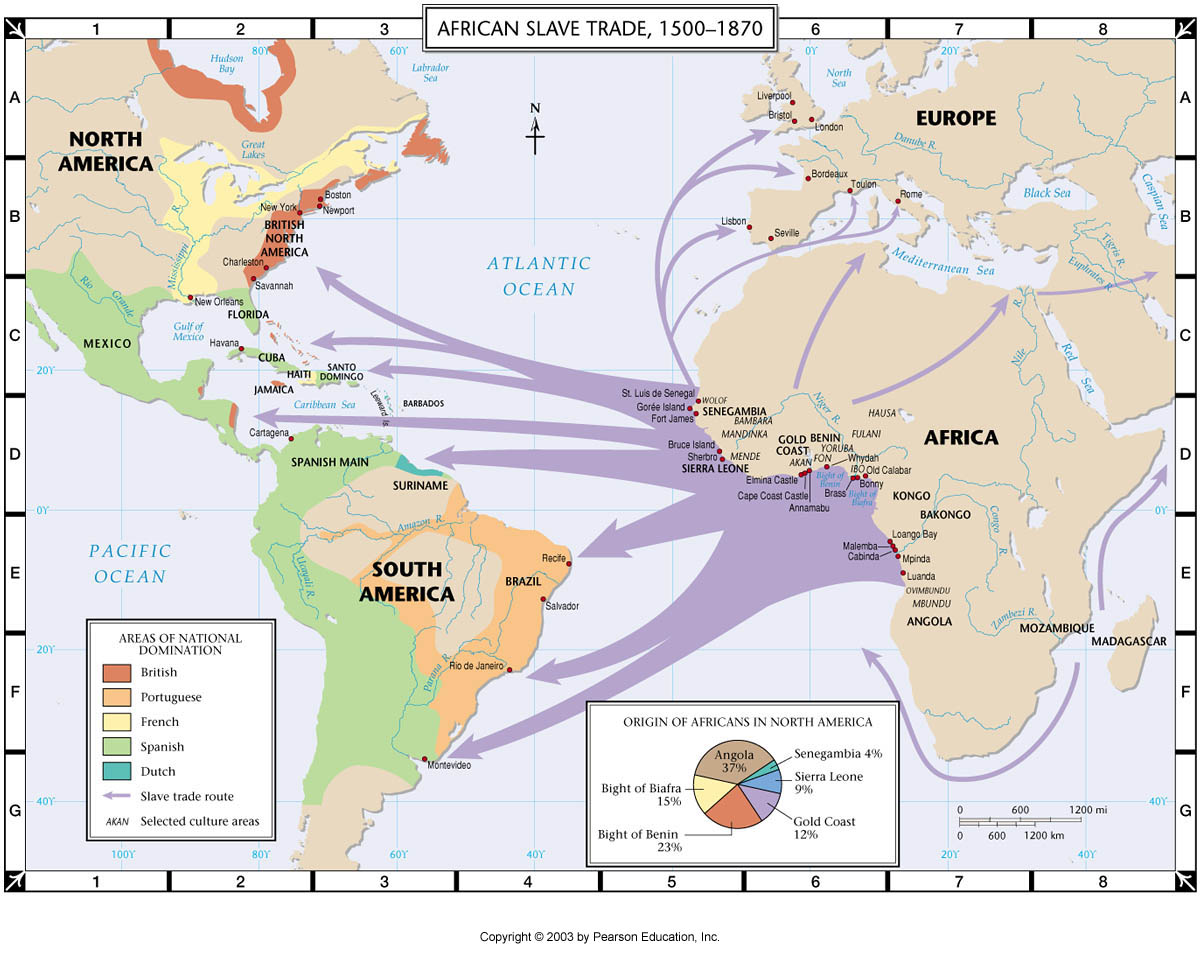
The idea of Latinos thinking of themselves to be anything less than white would mean they are closer to the oppression their ancestors felt. Simply put the darker the Latino the closer to Africa they are. The question is why is the black side of the binary so hard for Latinos to deal with? The answer lies with the Spanish colonization of the Caribbean and Latin America. The hierarchy of the dominant culture was quickly established that placed white Europeans at the top with African slaves at the very bottom and in the middle was the indigenous people. The ruling class was made up of white Europeans from Spain.

The media plays a huge role in Latino identity. The Latino Identity is typically defined as a light skinned, dark haired individual that is often made to look exotic. Afro-Latinos are rarely seen in areas of television media with the exception of sports. Despite what the media may consider to be Latino, the darker skinned people still remain fairly invisible. Print media, more importantly, magazines have the same issues.

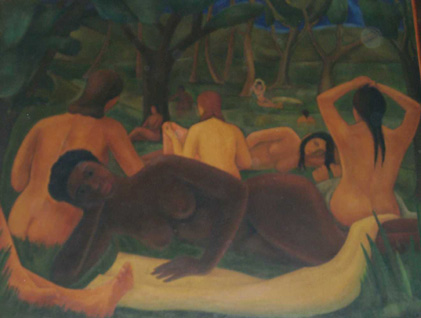
I know I just got real educational right now, but there is a reason why I do have the slave trade map at the top. More often then not we tend to forget our history or just simply avoid it all together. That is why this project is so important to me. We should never think that we are all not connected because according to history we are.

Latinegr@s Project: Roberto Clemente


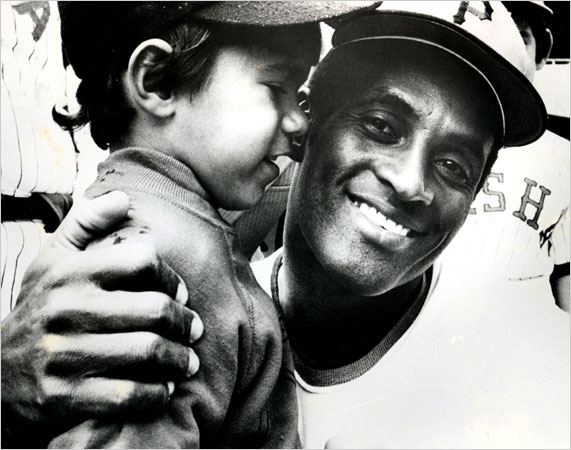
Let’s take everything you think you know about baseball right now and throw it out the window. When anyone of us think about the color barrier in baseball, we think about the late great Jack Robinson. The man that stepped through the door in Major League Baseball. He is honored in every stadium in America by having his number retired by all 29 teams. Of course he made it possible for a man like Roberto Clemente to step into the scene in 1955.

Roberto Clemente is well known for the great plays he has made on the field as well as the 3000 plus hits he has accrued over his hall of fame career. However, he is also know as a humanitarian. He spent most of his off season time doing charitable work across the Caribbean.

Ironically he died doing the very thing he loved to do. I am personally inspired by this man based on his work ethic and the love of his people. He used his fame and money to help the less fortunate. He played with passion and proved that he was indeed worthy of everyone’s respect. He was one of the most feared hitters of this time.

To this very day, he is the one person that is not talked about very much outside of Pittsburgh or Puerto Rico. I am waiting for the day that he truly becomes recognized for his efforts on and off the baseball diamond.

Here is his story…

Please remember to visit: http://lati-negros.tumblr.com/
Grassroots Project: LatiNegr@s

February is upon us and most people are taking the time to celebrate Black History Month. This month is so important to explore the contributions that black people have made in this country and perhaps across the world. In taking time to really look at this month, we normally focus on African Americans as they should. However, I would like to see that we expand the realm of this exploration to encompass Afro Latinos.

I have said so many times before that most Latinos don’t consider themselves black in anyway shape or form. They seem to refuse to believe the evidence that is out there that indeed a part of our history can be traced to Africa. So the connection is there. Then there is the one drop rules that has existed during the times of slavery that if anyone had one drop of black blood in there system…then they were black.

So, in the spirit of exploration, I have been working on a project with fellow bloggers, La Bianca and Prof. Susurro on something that we are passionate about. It is called LatiNegr@s. This is a collaborative effort that allows a bit of community blogging from anyone interested in adding to this effort of our exploration. We are encouraging people to submit blogs, pictures, videos, poems…really anything in this effort to really celebrate Black History Month in the way it should always be celebrated: together.

The link below is to the submission page in which all of this will be post on via Tumblr. I will post this link on the side bar and have it there for the entire month. It is my hope that you will try to contribute to the cause. The fact of the matter is that Afro Latinos are not well recognized in their place in society. I am personally working on a few surprises that I hope come together for this project.

Consider this to be a call of action that is being made not only on this blog, but on twitter and on facebook. The submission page is: http://lati-negros.tumblr.com/submit