Changes.


“You must take personal responsibility. You cannot change the circumstances, the seasons, or the wind, but you can change yourself. That is something you have charge of.” – Jim Rohn

It is the first day of June and although it is not quite summer yet, it is the season of change. This is the point in time where people start coming out of the their shells to enjoy such beautiful weather. This is a time where some students end a chapter of their lives to either enter the real world or move on to a higher level of education. This also becomes a point where people change their relationship statuses for something better or worse. This is the season of change and you can clearly see where I have started mine.

I needed something different for this blog. I liked the old web design but I just got tired of they way it looked and how it functioned for me. I will be making a series of adjustments that will make this page look better. I have also fixed the social media functionality that will allow people to share. I didn’t realize how much of a crutch it was for this not to happen. It took some one on twitter (@MissVersatile) to show me that this needs to be fixed. Believe it or not, that became the catalyst for change. I think her very much for that.

I am also of the realization that I need to change my header. I will have to work on that. I do not want to compromise the logo, so we will see what happens…

This makes me think about a lot of things in my life currently. The only thing that seems to remain relatively the same for me is my family, my job, and my dog. It seems like all other things are in constant flux. In fact, there has been so much change in my life that I don’t seem to give it the attention that it needs. As funny as this will sound, sometimes I feel like I am an agent of chaos. With all the constant change, I feel right at home and do my best work. A good example is me being able to write 21 poems in April during the busiest time of my life and yet manage 8 blogs last month when it is a relative ghost town around here.

I also think about the constant change with the relationships I choose to associate myself with. There seems to be a constant struggle to maintain something with those I have had some consistency with. But, at the same time I am always welcoming new friendship and different people into my life (no matter how long I choose to talk to them or not). I also sense a shift in myself as well when it comes to my social life. I know that I need to promote myself more and put myself out there when it come to my work, but more importantly, I have come to realize that I am more than just my work…I am also a brand. We live in a world that we all need to brand ourselves in order to be unique. I consider all this a product of my education and talent.

I have also decided to take on something that I feel needs more attention. I will not get into particulars on this post, but I created a brand new twitter account last week: @beingafrolatino. This is an undertaking that will require a great deal of change in my life and I am ok with that. I feel the need to change my game up a bit and really start to point out the conditions in which Afro Latinos live and deal with on a daily basis. I can say that I already know that I will start out small, but I plan to get a great deal of steam as the time goes. I plan on revealing the whole story of how all this unfolded in my next blog entry.

The biggest change of it all comes 12 days from now. This is indeed my birthday month once again. I feel like it was yesterday when I wrote about how I spent my birthday alone. I will say that will probably be not the case this year. I will be 37 and still fighting the good fight (which is leaving Syracuse). This puts me 3 years away from the big four-oh and I need to maintain my goal of remaining to look like I am still in my 20s.

"I am boycotting Q-tips."

I have been thinking about this for a while now. Let me preface this by saying that this blog post is about 2-3 weeks in the making ever since “Black in Latin America Mexico & Peru: The Black Grandma in the Closet” aired on PBS. My whole thought process about this has been festering since then and I have not been able to devote the time to really express how I feel about seeing this episode.

I think that the Black in Latin America series was incredible to begin with. There was not a single episode that was not simply amazing in terms of the amount of information presented. This was a ground breaking series that all history teachers need to show their students. I enjoyed it so much because it made me realize that there so much more that I need to know about the plight of the Afro Latino. Each episode was filled with information that I enjoyed very much to tweet small bits of information that we all should remember.

My world view never really changed in any of the first 3 episodes. Most of the documentaries were not really surprising to me. Racism is prevalent in just about every Latin American country. It is a fact that most of the slaves went to Latin America and this series made it a point to reference that all the time. This becomes important when ignorant people begin to state that African Americans and Latinos do not have a shared ancestry. It even looms larger when Latinos in general start saying they are not black.

This brings me to the final episode to this series in which the two countries highlighted are Mexico and Peru. I want to say that I knew about Mexico and it’s treatment of their Black Mexicans. I personally wrote a blog about Memín Pinguín and how racist those images are. So, nothing this documentary said about Mexico really surprised me.  I was actually proud of myself for doing that type of research, but nothing prepared me for Peru.

Let me talk about El Negro Mama, which is basically a minstrel show that is shown on prime time television.  This is character that portrays Afro Peruvians in such a negative light. This is worse than any black face incident or nonsense I have ever seen. I wont get into it as much as this blogger did, but needless to say this was something I was not even expecting. I plan to do my research on this and write about this properly in time for Latino Heritage Month.

The thing that had me really upset and reeling before they even showed El Negro Mama, was this one simple fact: Afro Peruvians pick cotton in the very fields that their slave ancestors did for $5 a day. This is something that I cannot even begin to wrap my mind around. It is one thing to have blatant and apparent racism in your face everyday, but to do that same job that your slave ancestors did? That is such a slap in that face and what really breaks my heart is that this is probably one of the better jobs one can get if you are black.

Think about this: people of color in the United States have it good. If you are working in a shit job and complain about how horrible work conditions are then I suggest that you shut the fuck up and realize that there are people who look like us practically being enslaved on this side of the planet in the year 2011! It makes me angry how people do not realize the implications of this. Sure, Peru is the only Latin American country to apologize to its black population about slavery but what does that really mean? Is it still ok to apologize for something you did wrong and continue to do the same things.

After that day I was ready to boycott Q-tips. Of course, I say that not knowing if Unilever (the manufacturer) actually uses Peruvian cotton. Trust me I did look this up and while I do not think so, it was the only thing I can say to raise an eyebrow and get a chuckle. I firmly believe that humor can be a way to spread awareness because the alternative is anger and that will not do me good.

So, I had been brooding about this weeks after it aired on May 10th. I was thinking about all this so much that when I was at a reception a week later, I stated to a group of friends and colleagues at the table I was sitting at that I was planning on boycotting Q-tips. Now, this was a joke. I was just pissed about the whole picking cotton thing and we were talking about this documentary. What makes this story hilarious was that at this very table was the Dean of Student Affairs (my boss’ boss). I know him personally and he is a great guy but all he asked was….why are you boycotting Q-tips?

This of course this made me laugh as I had to carefully explain with no curses what this documentary was and what they had shown. His reaction was really serious like….“so Q-tips uses this cotton?” I wanted to bust out laughing and I told him that I was joking. But, I appreciated that he understood where I was coming from.

So where does this leave me? It leaves me with the feeling that I need to learn more about Afro Latinos. My world view has changed a bit, at least when it comes to South America. Of course, I know that Latinos are a complicated people, but there cannot be a time in which any of us really believe that it is ok in this day in age to treat others like second class citizens. More importantly, it is the mentality of many of the Afro Latinos that do not see how they are being oppressed is what makes this even more tragic.

I plan on buying this series on PBS.com and I highly recommend that you all watch these episodes which are available here.

Color Blind Latinos

I am thinking that I am justified in my thinking that some people just don’t get it. I know that I am not an expert nor am I a historian but I do read, which means that I have knowledge in several areas. When I can sit here and write blogs about being Afro Latino I am only a reflection of things that I have read, seen, or experienced. I know that in my style of writing there is quite a bit of emotion as well. That is just me, take it or leave it.

Naturally, I will feel obligated to give my opinion when needed about Afro Latinos and it is not a surprise that I always feel like I am teaching someone something  new. So today was no exception by having a disagreement about Afro Latinos on the Being Latino Facebook page.

Being Latino is a blog that celebrates…well being Latino. There is a team of blog writers that post material everyday about various topics. One of today’s topics was about Afrolatinos: “The Untaught Story” (video below). It was a very good post by Eric Cortes which can be found here. Of course, on the Facebook page you can make your comments and click “like” if you did indeed like the post. I was a bit intrigued to see any of the feedback, not because of the nature of the blog content, but just to see what people have to say about the topic itself. So, to save time you can view the discussion here.

There were some thing said by a few people that I found interesting. There was the suggestion that the social issues in Latin America was more of a class issue rather than a race issue. That perhaps articles and documentaries like this were promoting division rather than unity. I have heard arguments like this before, on this blog in fact, that pointing out racism creates more divisions. I personally do not beleive this is the case. The fact is that Latinos as a body of people are not unified at all. The color of skin complicates things even further.

As I argued on that site, I think that suggesting that classism is the real issue instead of racism is misdiagnosing the problem. Sure, in most countries like Colombia and Mexico, most Afro Latinos are poor. That is not because of some caste system that was created by the elite like in India. This simply the fact that people are oppressed because of the color of their skin. Unity does not help this because most privileged Latinos simply do not care enough to unify.

Such thoughts about unity and the “let’s all get along” mentality simply means to me that many people are color blind. While that sounds ideal on surface because no one sees color because we are all human beings, the fact is no ones sees color! I want you to see my color. I want you to see my culture. I want you to acknowledge that there is a blackness within our culture. Once you get people to acknowledge this, then there is a possibility to unify.

Then there was a comment that Afro Latino blood was not all that prevalent within Latin America with the exception of Colombia, Brazil, and “tiny” islands in the carribean. This was something that set something off in my intellect considering that the same person said the Black Mexicans barely exist in Mexico since they are less than 1% of the population.

I am totally not sure about that speculation of the 1% in Mexico but I doubt that is true. There are whole cities like Vera Cruz and Oaxaca that are in Mexico where a large numbers of Black Mexicans. However, are they recognized as citizens? Afro Latinos live in every country within Latin America and the fact that this person cannot recognized that is just lack of education on his part.

Conversations like this is why I press on. There are people that refuse to really see the African side of their heritage. I mentioned that we can all move our hips to salsa with the congas and the zulu beat but there is no way in hell that most privledged Latinos will admit their roots back to Africa. I think it is time for a history lesson…

Latinegr@s 2011: Laz Alonso

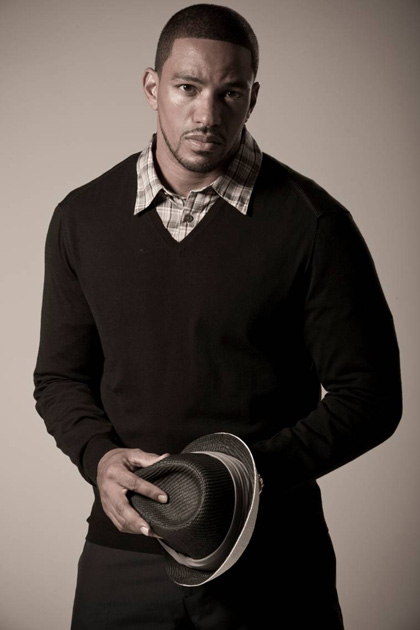
Yet another person that I cannot believe that I did not highlight last year was Laz Alonso. While, I certainly wrote a blog about Zoe Saldana (and they were in the same movie), I clearly missed that opportunity last year. Now, I follow this gentleman on Twitter and I kinda put it out there to see if he would be down for an interview but that was not meant to be. So, like a true blogger, I will write about him anyway…lol

I first saw Laz in a movie called Miracle at St. Anna. This was was Spike Lee joint that came out in 2008 in which Alonso actually played a Afro Latino. The story is about four Black American soldiers who are trapped in a small Italian village in 1944 during the heart of WWII. This move was done very well and I am surprised it did not get more acclaim.

At that point I figured he was bound for something good. Laz Alonso is Afro Cuban and was born on March 25, 1974 (a great year). He is an alum of Howard University that graduated with a degree in Marketing. After working at Merrill Lynch for a little bit, he went after his heart’s desire: acting. Laz has been in a number of movies in his career that started in 2000. However, the role that has made him famous comes from the blockbuster move, Avatar, where he played the character, Tsu’tey.

I have to admit, I should have known who he was in this movie and I was just astonished to know it was him. I hadn’t seem many movies that he has been in nor much of his television roles. What I do find amazing is that Alonso seems to do his best to play Latino characters in many of the roles he plays. Perhaps not all roles are meant to be Latino, but some is good for me. Like playing Detective Gil Puente in Southland or Detective Ray Di Santos in Captivity. These are the type of characters that are not often seen on television.

When I talk about the fluid identity of Afro Latinos, I am reffering to the ability to go between the worlds of African American and Latinos. It is totally understandable how Laz Alonso becomes valuable in the diversity of roles he could be offered. It is important to note that he is one of very few Afro Latinos in Hollywood.

I think Laz Alonso is an up and coming actor that has not reached his pique and it will be very interesting to see how his career unfolds

Celia Cruz: The Queen of Salsa

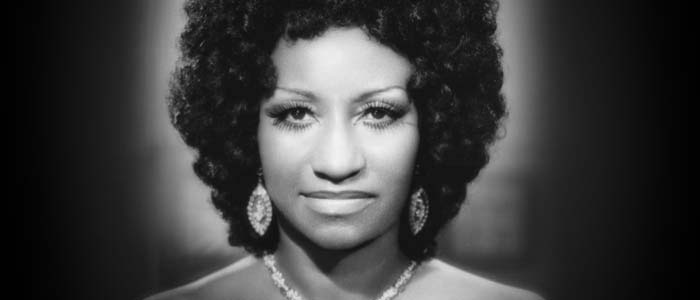
It has been such a long week for me and yet the days keep flying by. After the last post, I started searching for pictures of Afro Latinos and I came across the one above. I cannot believe with all the posting that I did last February that I did not write anything about the great Celia Cruz.

Growing up in my house would have never been the same without hearing music from Celia Cruz. It seemed like every family cookout we were serenaded by her various albums. I feel like she had a greatest hits album when I was just a kid. There were so many songs that I could sing when I was kid that I had to search for them when I was adult. I could remember my father making tapes from vinyl and her music was always on heavy rotation.

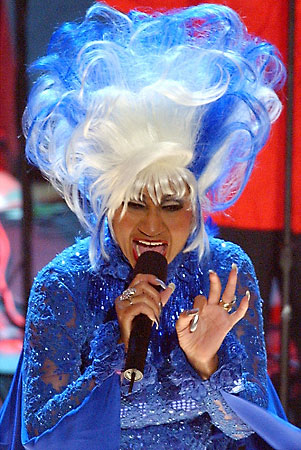
When I think about the golden age of salsa, which is clearly before I was born, one of the people I think about was Celia. What struck me the most about her music was seeing her perform on tv. I was not used to seeing someone who looked like they could be a member of my family performing salsa on television. I was awe struck almost expecting someone who looked completely different. After all, from what I saw from on Univision, Telemundo, and any album covers were light skinned Latino men with light skinned Latinas.

While I am not too educated on her entire life I do know that she was born on October 21, 1924 in Havana, Cuba. She spent most of her life performing and has earned 23 gold albums. She has won 7 Grammys and while that is impressive in itself, I can only imagine how many she would have one if they recognized her contributions to music early on. I counted over 60 albums to her name and in my research I hear that number could be as high as 80. In any case, she a woman that loved music deeply.

I think about that. Over 60 albums! I personally have 45 of her songs. That is a mere fraction of her collection. That can be so hard to fathom when I think about all the other artists I follow in which I have all their albums. Not to mention that I have none of her recent songs because most of what I have is from what I remember hearing as a kid.

Celia died of a brain cancer New Jersey on July 16, 2003. Her title has not been and will never be revoked. She is the Queen of Salsa.

Latinegr@s Project 2011

I feel that this project is in phase two of it’s existence. My partner in crime, Bianca, and I have been talking about what do with this month and what are the next steps to keep this going. Unfortunately for her, I have been so slammed with work that this continues to be an ongoing conversation.

For me, I am going to do what has worked for me. I will continue to weigh on issues that revolve around the blackness of Latinos. I have also decided to use my tumblr to highlight images that will enhance the Afro-Latino experience. This will not take away from the Latinegr@s site either, which is a shared site that anyone can contribute to. 
This is a short month with lots to do and talk about. I cannot guarantee that I will write everyday but I will say that my contributions to this project will be substantial. I think I want to focus more on images of Afro Latinos because as much as I am good with words, pictures can speak louder if used correctly. My point with this is that I do not know everything and I certainly do not want to fake it. I want to explore images that are insightful and post ,on this blog, the ones that make me think the most.
I also plan on doing some interviews with people who are out there doing great work carrying the Afro Latino banner. I may just sit here and write about the culture but there are people out there that promote it in ways that I never could. 
This is about sheer awareness. Black History Month should always be a time when people just become more aware of the things around them. Lack of pride in what we are is one of the main reasons why it is so hard for people to make it.
So in the end, I plan on doing my part in educating myself. I am no where near an expert but I will say that what I learn, I plan on sharing with the rest of you. 

As a reminder.. the submission page for the Latinegr@s site is: http://lati-negros.tumblr.com/submit

Black History Month or African American Month?

Once again we are here. The start of Black History Month where we get to learn about the past and be hopeful for the future. Last year, I dedicated this blog the Latinegr@s project that, in my opinion, was a great success. Now we turn the page to a new year and the project is still intact. While I will be participating in this project, I will not do it in the same way as I did last year. I will be weighing in more using my own opinions on this month as well as highlighting things and individuals that I did not get to last year.

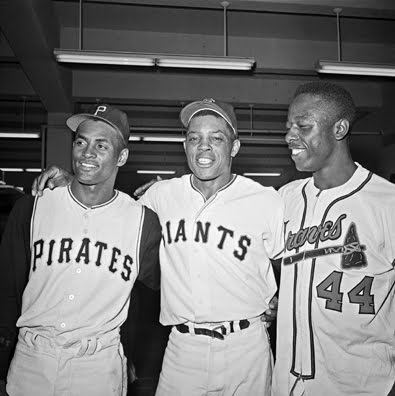
A few days ago, I was talking to a friend of mine and we were speaking about how her son had to pick a black person to do a report on for Black History Month. This is not that easy of a task if you think about it. There are so many historical figures to choose from that can be quite cliché. However, the choice that her son made (mostly likely with the help of his mother) was Roberto Clemente. Of course, I am all in favor for this choice. Here you have a hero who excelled in baseball as well in his community. I have documented his legacy last year.

He was told that Roberto Clemente cannot be chosen because he is not African American. Really? How much sense does that make? Do not get me wrong, this month is all about celebrating African Americans but I was also under the impression we were celebrating being black. Skin color is something that you cannot change (although Sammy Sosa and Vybz Kartel would disagree with me on this). So my question, is Black History Month strictly about being African American?

Sure I am Latino, but the color of my skin automatically puts me in a group that other poeple consider to be Black. So, I am forced to identify with this group. My skin is very much a part of me as my culture is. So does that mean that Afro Latinos should not be recognized even a little bit? What about Caribbean people in general? Some to the darkest people I know are from the islands. Of course, if we are making it exclusively for African Americans then you are excluding Africans. Is that really the point here?

I am not disputing the validity of this month. I think it is needed, but if any one person or institution is going to put limits on such things then they need to be aware that Black is very encompassing. If it is that hard to understand then make it African American Month. However, I consider this month to be very much like Latino Heritage Month in which explores all different aspect of being Latino. Black History Month should conceivably do the same thing.

I would hate to think that the word black is strictly reserved for a certain people because the Black experience does not have such limits.

Is She Really Black?/De verdad es morena?

The issue of skin color has become so personal to me. It isnt just a indication of beauty. I am attracted to a diverse pool of women and I know I am attracted to one type of woman over another. However, I feel the measure of a woman always comes down to attitude and personality. When it comes to skin tone, I believe it is all connected to ancestry.

Keeping that in mind, I read this article on Clutch. I will need you to read this before you can go past this particular paragraph. I have written about skin color in the past before and I feel that this will be the perfect prelude to Latino Heritage Month that starts next week.

Let’s look at the issue here. There seems to a growing need for actresses (and actors too,most likely) of color to choose if they are Black or Latino as if there was some notion that they cannot be both. I am fully aware of my color when I look into the mirror. If I were to get stopped by the cops they are not going to have a debate on whether I am Black or Latino. They will see me for the color I am. The shame in all this is that people in this country (and Latin America too) refuse to see how homogeneous we are all slowly becoming. The more we seem to merge into one color the more that there is a call for distinctiveness.

I am always amazed by the amount of ignorance that is in our culture. Now, let me me identify “our culture.” For the purpose of this argument I will just assume that Latino and Black are one in both the same considering that in most places, like New York City, we all go to the same schools and live in the same neighborhoods. Couple that with the fact that both Latinos and Black come in all shades. I would like think that my readers are all familiar with the “one drop rule“.

Both share many things in common and one of those is a dislike for darker complexions. I wont sugar coat this because it is true. If someone is too dark there are jokes about how hard it would be to see such a person with the lights on…and this is both cultures I am talking about here. I will just mention that my cousins called me “tarbaby” as a kid. So, how can I ignore my skin color?

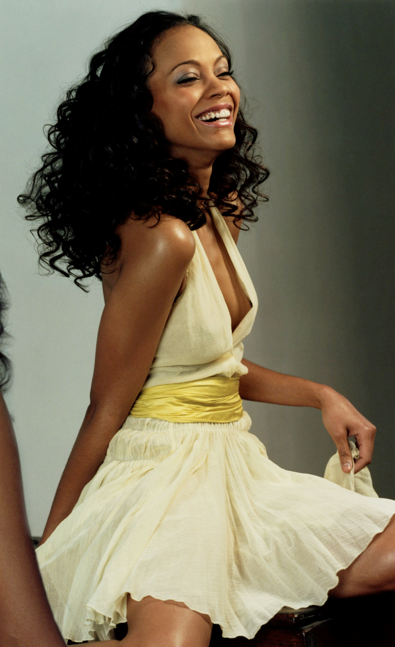
On the same notion, How can any Black person seriously ask about Zoe Saldana, “Is she even Black?” Really? This type of ignorance is why I have tried my best to talk about Afro Latinos. This not about if I choose to call myself to be Black or Latino. It is about knowing your history. It is knowing about why there are dark people who speak better Spanish than any light skinned Puerto Rican you know. It is about realizing that slaves replaced the Taíno Indians as the workforce because they were slaughtered by the Spaniards, who then mated with the salve thus the birth of Afro Latinos. So do we really need to choose?

But, often times we are left to read very little about Afro Latinos and their place in the world. One would think that Afro Latinos are only suited for Baseball. I do not see anyone asking David Ortiz to choose if he is Black or Latino. At the end of the article the question was asked: In a so-called “post-racial America,” why are we still caught up in the often insignificant nuances of Blackness? Very simple answer…self hate.

We see the what America considers beautiful. The skinny Meghan Fox or Lady Gaga (just using these women as examples) grace the covers of magazines and young girls of any color want to look like them. The images we see of beauty tell many women that being light skinned is the best. It is perfect to have the complexion of a Christina Aguilera and the ass of Jennifer Lopez. Beauty and the definition of it has all been based on a color scale. Some people do not buy into it, but a lot of people don’t.

Self hate also breeds haters. Let’s be real, there are some real haters in this world that will think that Afro-Latinas are trying to replace African American women on this scale. It is bad enough that Black women have to deal with white women and light skinned Latinas in the competition for Black men…how do you think they will feel about Afro Latinas? Truth be told…Afro Latinas suffer from the same issues that African American women have. The pendulum of what is considered beauty in this society hardly swings their way.

I know I have made this mostly about women, but I have often said that I have had problems considering myself as a good looking man based on my dark complexion and no matter how much a women would tell me how cute I am… I simply had trouble believing it.

This it a subject that maybe tiresome to bring up and talk about but, people need to be aware that Afro Latinos should not have to make a choice between two cultures when we simply exist in both.

Guest Blog: Reflections of an Afro Latina – Carmen Mojica


I want to introduce you all to a young woman I find so amazing. She is have a book release party this Friday at Nuyorican Poets’ Cafe. I told her that I am so sorry I cannot be there. Here is Carmen Mojica! I hope you find this latinegra as interesting as I do!

As I reflect on my life, just days before my book release party at the Nuyorican Poets’ Cafe, all I can think about is my hair. And how something like cutting off my chemically treated hair was the catalyst for my metamorphosis. Anthony asked me to guest blog about where I am these days with my journey and it was a perfect time to ask, as I am in a very pensive mood about who I am and who I am becoming.

I can still remember that December night in 2004 when I finally had the guts to cut it all off and go natural. It was a freedom I didn’t know existed; it was also a reason to challenge the effects of racism and socially imposed standards of beauty on my self-esteem. Coming to terms with my African roots was hard. For most of my life, I wanted nothing to do with my African-ness, the very heritage that would stare back at me when I would look in the mirror. It took me almost 20 years to embrace it and, among other influences, writing about my experience was instrumental in unraveling the web of self-hatred.

My book, “Hija De Mi Madre” is the culmination of experiences and undergraduate research that describe and explain the effects of my identity as an African Latina on my life. It is a combination of memoirs, poems and research material that not only explain the effects of race on identity from an academic standpoint but also shares my own life as a living example. Self-hatred is a disease that runs rampant throughout much of the African Diaspora due to colonization and the dehumanization that occurred at that time. In the Latino culture, the African component of the Latino identity is often ignored, denied and is not usually a subject that is up for discussion. The original reason I wrote my book was because of one of my last classes while still at SUNY New Paltz.

I was in a class called, “Women in the Caribbean,” and one of the topics for discussion was the Afro Latina identity. At the time, as I was still exploring my racial identity, this topic took hold of my attention and I decided to do my final paper on the topic. It was hard to find writing by Afro Latinos as I did my research. After I finished the paper, I decided to add my voice to the research I had done.

These days, I am still ever learning about my racial identity. And ever since I made the choice to write and complete my book, more and more awareness is building around the subject of African ancestry in the Latino culture has cropped up in many places. Events, books, and even documentaries are telling our story in full. Tonight, I am in a reflective mood, as I think of who I was when I started my book and who I am now. My journey in understanding all I can about my roots is continious; my place in history as a woman of the African Diaspora is one of the lens I look at the world through. These days my attention has shifted to empowering women in my community to make the best choices for themselves at childbirth. As I pursue certification as a birth doula (to be done by the end of this year, god-willing), I recognize how much love heals not only my own emotional, psychological and mental scars but also how the love I have been cultivating for myself affects those around me.

As a writer, I have been aware for a long time that words are powerful; they can birth worlds. I find that I speak sometimes for those who can’t find the words to say what they are feeling; yet I also understand that everyone has a story. And as I tell my story, at presentations and even one-on-one, I realize that not only do we all have stories, but they too are ever changing. They are influenced by the stories that we become a part of; the ones we interact with, burn bridges with, start new chapters with. I suppose all this talk about stories is a roundabout way of expressing this point I’m at in my life. This new chapter of embarking on becoming a birth professional and bringing the love and lessons I’ve been learning about being an Afro-Latina woman into that new venture has showed me the importance of a few things. Relating to other through our stories, gaining strength to continue on our paths and moments of self-reflection are essential in the path to self-awareness.

And I hope that when I share my story with others, that they feel this. That they know their story is important too, and that I can’t wait to hear about it.

If you’re interested in checking out my work, here are links to my thoughts, words and my book:
My blogspot: http://www.reluctantbeauty.blogspot.com
My Tumblr: http://www.mujerinterrumpida.tumblr.com
My presentation at my alma mater on my book: http://www.veoh.com/browse/videos/category/activism_non_profit/watch/v19049189fKrhNBPa
Where you can get my book: http://www.lulu.com/content/paperback-book/hija-de-mi-madre/7682210

Latinegr@s Project: Thank You!

Last day of Black History Month. It has been a great ride. I have taken myself to a different place with all the readings and research. However, the project will continue. While it will not be everyday on this blog, http://lati-negros.tumblr.com/ will always highlight Afro-Latinos in a positive light!

I want to thank a few people. First, I want to say that the hits on this blog has gone up which means people have been reading and I appreciate that. So thanks to all you for showing support. I think I have learned more by posting all the bios than I have from taking classes in History.

I want to also thank Bianca. I did not post as many blogs as she did. She did all her homework on this subject and truly carried me through this project. She also moderated the tumblr page. This project came to life on twitter in January when we both had a very open discussion about the lack of Latino representation in Black History Month. I had no idea about what type of involvement we would get and I am surprised by the end result.

Thanks also goes out to Professor Surro. I am always impressed by someone of such intelligence. Her passion for sharing knowledge is unmatched. Her blog is incredible. I would encourage people to frequent her site as well.

For those who participated, you are another reason we started this project. While we wanted to educate people on Latinegr@s, we also want to get back what we put in. I know that I have spoken to many people in person and via the internet about this project and the feedback has always been a good one.

There are the haters as well. I want to thank you too. Without your ignorance this project would not exist. So keep sending the hate mail. We love it. Someone of you thought this was not going to amount to much and that is ok. I thinking we all proved the naysayers wrong.

I anticipate that we will still do profiles every now and then and hit up everyone again in time for Latino Heritage Month. So, please do not think that because this month is over that you cannot submit something or that you cannot contribute. The tumblr site is always open for submissions or you can guest blog here.

Thanks again! I will be returning to my regular blogging tomorrow!