The Assuming Eyes…

“When you point your finger at someone, three fingers are pointing back at you.” – Anonymous

I wondered how long I can go without having to reverting back to my thoughts. I am proud to say that i dedicated a full month to the Latinegr@s Project. Poetry is another thing. Over the last month I created a separate blog for Poetry. Not to say that I will not feature poetry here because I will. I am just featuring my thoughts in a different way via poetry and music.

There has been something on my mind for about  two weeks or so. Yesterday, I just came to the fore front. I am not really sure if it was the endless coverage of Tiger Woods or if it the occurrences in the world around me. I guess I am both amused and troubled about the hypocrisy around me.

If you divert your eyes to the top of this page, you will see my mantra. “I am a firm believer that you are never too old to change. I am not perfect and I do not expect perfection for the people I know. However I do expect people to be real.” I came up with that some time last January and I still hold true to that. I am a person that can go back and forth on issues such as fate but, I am human and we do tend to evolve.

I do not agree with the judgment of others in any fashion. So whether they judge me or they judge others, it makes no difference. Not one us have the divinity to make judgments because we are not perfect in any way. I guess what really makes me smile is that fact people who have their thoughts or opinions on situations are themselves, hypocrites.

I am one to believe that people can change once they hit rock bottom. The ability to change is all based on losing everything. We all have lessons that need to be taught to us. When someones says that people cannot change, I take offense to it personally because I have indeed changed. I have also witnessed change in others. So, it is not like I am pulling this ideology out of my ass. Of course, with that said, there are those who do not change and that is more a personal choice that some genetic excuse that people can muster.

As most of you already know, I believe in forgiveness. Not in the divine sense, but in the sense of moving on with your life. This statement alone has caused some to say that I am a hypocrite. There is one person in my life I refuse to associate myself with since my college days. It is not that I do not forgive him because ultimately the past is the past, but it is more that he does not see why he needs to be forgiven. There the thought that his theft of what was mine (he still has it) is something he doesn’t acknowledge as wrong. My lack of association with him is not just a decision that was made by me but all of his former friends.

So when bringing up the question if people can change, I still think they can but, they have to want to change. I think forgiveness plays that role in allowing yourself to forgive and be forgiven. However, repeating the same behavior over and over again leads to people never trusting you again.

The most amusing thing to me how some people can judge others and live a similar type of life. I know that people in general are assholes. We are human and we do whatever we want. Evidently, we cannot escape the ever assuming eye of others. If people want to take the mantle of being judgmental then they need to turn those assuming eyes on themselves.

Latinegr@s Project: Thank You!

Last day of Black History Month. It has been a great ride. I have taken myself to a different place with all the readings and research. However, the project will continue. While it will not be everyday on this blog, http://lati-negros.tumblr.com/ will always highlight Afro-Latinos in a positive light!

I want to thank a few people. First, I want to say that the hits on this blog has gone up which means people have been reading and I appreciate that. So thanks to all you for showing support. I think I have learned more by posting all the bios than I have from taking classes in History.

I want to also thank Bianca. I did not post as many blogs as she did. She did all her homework on this subject and truly carried me through this project. She also moderated the tumblr page. This project came to life on twitter in January when we both had a very open discussion about the lack of Latino representation in Black History Month. I had no idea about what type of involvement we would get and I am surprised by the end result.

Thanks also goes out to Professor Surro. I am always impressed by someone of such intelligence. Her passion for sharing knowledge is unmatched. Her blog is incredible. I would encourage people to frequent her site as well.

For those who participated, you are another reason we started this project. While we wanted to educate people on Latinegr@s, we also want to get back what we put in. I know that I have spoken to many people in person and via the internet about this project and the feedback has always been a good one.

There are the haters as well. I want to thank you too. Without your ignorance this project would not exist. So keep sending the hate mail. We love it. Someone of you thought this was not going to amount to much and that is ok. I thinking we all proved the naysayers wrong.

I anticipate that we will still do profiles every now and then and hit up everyone again in time for Latino Heritage Month. So, please do not think that because this month is over that you cannot submit something or that you cannot contribute. The tumblr site is always open for submissions or you can guest blog here.

Thanks again! I will be returning to my regular blogging tomorrow!

Latinegr@s Project: Did You Know?

I didn’t realize that we are currently in the last week of Black History Month. It wasn’t until I read Latino Sexuality (shameless plug of my interview…lol), that I noticed that I only have days left to get all the things I wanted to get done with project. I have done much research and not all of the things I found were long enough to sustain a single post. However, I figured I would compile some of the things I found interesting so I can share with you all.

Afro-Latino Fraternity

I found this bit of information to be a surprise. Many people in the Greek community knew that there was a Afro-Latino Fraternity called Beta Sigma Kappa. Founded in 1998 at the the University at Buffalo, Beta Sigma Kappa Fraternity Incorporated set out to “promote African and Latino culture throughout society.”

Being that Beta Sigma Kappa is almost twelve years old, there isn’t much information out there for me to document any philanthropies or the number of men through out the entire organization. The only thing that I do know is that there is a chapter at the University of Buffalo. I have made attempts to contact a few brother of that organization so I will wait to see how that pans out.

Afro Latino Festival

There is a festival in Bree (Belgium) where Afro Latinos celebrate culture. This was something that I was practically drooling over. I am still doing some research, but this is something that happens every year. I posted a following video from last year’s festival on http://lati-negros.tumblr.com/. There is a facebook fan page as well.

Nicomedes Santa Cruz

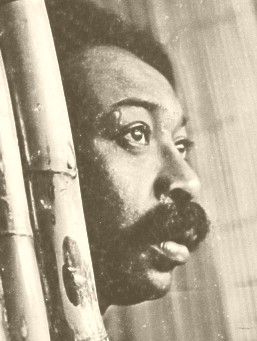
Nicomedes Santa Cruz was a Peruvian poet, journalist, and folklorist. He was born on June 4, 1925 in Lima, Peru. He was best known for raising public awareness of Afro-Peruvian culture.

As a child, his mother, Victoria Gamarra Ramirez would recite décimas to him. A décima is a style of poetry that is octosyllabic and has 10 lines. This artistic form of poetry is often found in Latin America. In 1945 he met Don Porfirio Vasquez who was a decimista and folklorist. He was one of the pioneers to regain cultural identity of Afro-Peruvians. Vasquez became a major factor in Nicomedes development as a decimero.

Nicomedes began his professional life as a blacksmith. He opened his own store called Herrira Y Cerrajeria Santa Cruz” in 1954. However, in 1956, he abandoned his shop to fulfill his destiny. Santa Cruz decided to travel throughout Peru and Latin America, composing and reciting his décimas. After his travels he became an a radio announcer and a commentator for various playhouses throughout Peru. He made his theater debut in 1957 at the Teatro Municipal de Chile, with the company Pancho Fierro, in a show called Black Rhythms of Peru. Through his radio broadcasts, and collaborations in the daily newspapers like “Expreso” and “El Comercio”, him along with his sister Victoria began to revive Afro-Peruvian folklore through a theater company they formed. They wrote several playwrights together from 1959 to 1961.

He recorded 4 notable albums in his career. The first was in 1959, after his mother’s death with his group Conjunto Cumanana titled Kumanana. The next two came out in 1960 titled Ingá and Décimas y poemas Afroperuanos. The final was a four-album set called Cumanana which came out in 1964. He also wrote a series of books filled with poetry. All listings of books and recordings can be found here.

In the 1970s, he continued promoting Afro-Peruvian folklore. Nicomedes presented the first Black Arts Festival, held in Cañete, in August 1971. He then went to Africa in 1974, where he participated in the symposium “Négritude et Amérique Latine” in Sengal. That same year he traveled to Cuba and México, participating in a series of television programs.

In 1980 he moved to Madrid to work as a journalist at Radio Exterior de España. During this time he does some traveling including a trip to Brasil in 1985, where he participates in the Consultation on Black Culture and Theology in Latin America, by giving a lecture entitled “Aportes del Negro al Cristianismo en America”. In 1989 he taught a seminar on African culture in Santo Domingo. He did manage to travel back to Peru several times always promoting his culture through his books and teachings. Nicomedes Santa Cruz died on February 5, 1992 from lung cancer in Madrid, Spain.

While I did not highlight everything he did, I consider him to be a very prominent Afro-Latino that not many people may have heard of. I know up until this project, I have never heard of him. If you wish to learn more about him and Afro-Peruvian culture, please check out: www.nicomedessantacruz.com


Latinegr@s Project: Buena Vista Social Club


I have to admit when I first thought about highlighting this amazing group I thought it would be an easy thing. However, like most things as significant as they are, the history is very deep. My love for music is well known and when I heard these band of musicians play, I was hooked. So let’s stick to the facts.

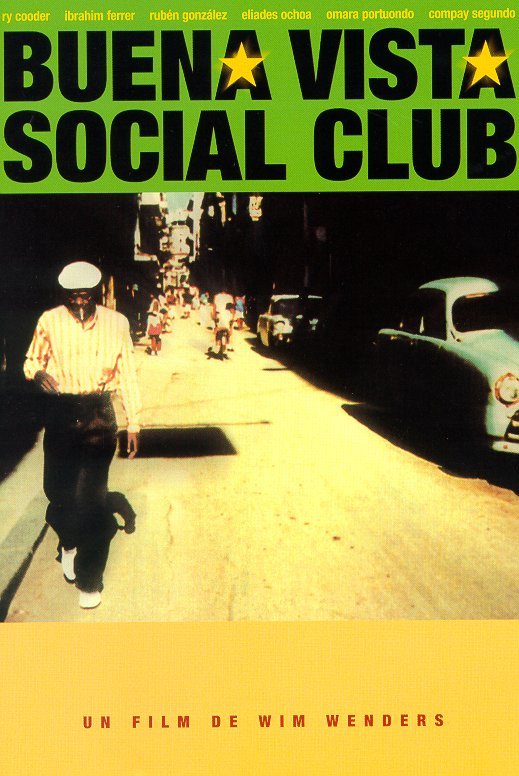
Buena Vista Social Club is the name of the album by a group titled “Buena Vista Social Club”. This was a compilation of sorts led by a Cuban musician Juan de Marcos González and an American guitarist Ry Cooder. They brought together some of the finest veteran Cuban musicians such as such Ibrahim Ferrer, Rubén González, and Compay Segundo, whose careers were stunted by the revolution of 1959.

The album itself was inspired the actual Buena Vista Social Club. This members-only club was located in the Marianao neighborhood of Havana. The members of this club was the social elite that dates back to the Spanish colonization of Cuba. As in most clubs through the island, membership was determined by ethnicity which started during the time when Afro Cubans were discriminated against during and after slavery. However, Havana had a social black elite called Sociedades de Negros (Black Societies) made up of doctors and engineers. Buena Vista Social Club was the place they came together.

Many prominent musicians and bands performed there during the 1930’s and 40’s. This musical era saw the birth of mambo, the charanga, and development of traditional Afro-Cuban music. Most of that music of the time as made a strong impact on current Latin Music today.

In 1959 the Cuban Revolution gave birth to communism. Led by President Manuel Urrutia Lleó, the government closed all gambling spots, nightclubs, and any other establishments associated with Havana’s luxurious lifestyle. This included any organization in which membership was exclusionary. The Cuban government made an effort to build a “classless and colorblind society”, but it struggled to define policy toward cultural expression in the Afro-Cuban community. Ultimately, these measures led to the closing of the Buena Vista Social Club.

These closures put some the greatest Afro-Cuban musicians out of work for more than 40 years. This style of music was sharply in decline until the Buena Vista Social Club collaboration resurrected it.

In 1996, Ry Cooder was invited to music producer Nick Gold of World Circuit Records to record a session two musicians from Mali and a collaboration of various Cuban artists. The African musicians could not obtain their visa which made Cooder and Gold changed their plans and record an album of Cuban music with local musicians. Some of these local musicans, like Ibrahim Ferrer, were the same artists that played in the actual clubs of Havana in the 1950’s. The album was recorded in just six days and contained fourteen tracks. Most of the communication was conducted via an interpreter, but anyone will say that music was the universal language spoken during that week.

Buena Vista Social Club earned a nomerous amount of praise and accolades from several music writers and publications. In 2003, the album was ranked number 260 on Rolling Stone magazine’s list of the 500 greatest albums of all time.

I personally have this album and I feel it makes me connect to my roots. This is a must buy for any music lover.

Please remember to visit: http://lati-negros.tumblr.com/

The Final Cut

What do you do
when the urge hits you
when all you want to do
is love someone?
Do you tell them
in hopes they wont
recoil because they
have no idea what to say
because, clearly on this day
expressing those feelings
becomes Paramount.
Almost in a cinematic
type of way, in which
we think that’s what love should be
but once we hit reality
it is not even close
we are too stuck on
the idea that love happens
in a perfect way and
we never ever admit
that the love we currently have
right now, at this moment
is fucked up.
Nothing is simple
yet we hold on to
dreams of what was
only to say “I Love You Because…”
but before a word can
leave your lips
this scene is cut out
of this movie since
your love scene or
romantic interlude is
just not perfect enough
to make it… (sorry)
So we need to try again
maybe if you decide
to change your relationship status
on facebook or declare on twitter that is
because, of course we all know,
it is totally official
if facebook says it
otherwise anything “not real” will be deaded
in a second since the
love is not socially real
for the cinematic reel
then it doesn’t really matter how any of us feel!
When all I want to know is
what do you do
when that urge hits you
and you know that expressing
that one thing
will only end up
on the cutting. room. floor.

Latinegr@s Project: Afro-Colombians

As this project continues I wanted to make sure that profiles and education was not just our main focus. I want us to also think about awareness of what is really happening in the world around us. Since so many of us think that racism and oppression may not be as prevalent this world, but indeed it is, particularly, for Afro Latinos in Latin America. 45% of the Latin American Population is Afro Latino.

Today I will put the spotlight on Colombia. 21% of the 44 million people live in this country are Afro-Latino. Most of them live through severe poverty despite being recognized in 1993 as citizens under law 70 (yes you read that correctly). This law was highly celebrated as a step in the right directions for Black Colombians, who are direct descendants of slaves. However, not much progress has been made since this law was passed. Afro-Colombians continue to be displaced due to economic interests

Even though slavery was abolished in 1851, Black Colombians were forced to live in the jungles as a form of protection and begin to share the territories with the ingenious population. After the abolition of slavery, the Colombian government came up with this idea of mestizaje, or miscegenation. They wanted to eliminate or at least minimize the African population by “whitening” them. This caused both minority population in further into the jungles. Afro-Colombians and indigenous people were, and continue to be, displaced them in order to take their lands for sugar cane, coffee, and banana plantations; as well as for mining and wood exploitation.

As of today, this came across the AP Wire:

BOGOTÁ(15 February 2010) – The UN Independent Expert on minority issues, Ms. Gay McDougall, called on the Colombian government to concentrate efforts in improving the situation of those communities identified as Afro-Colombian, Black, Raizal and Palenquero, especially in key issues related to displacement, dispossession, poverty and violence against individuals and communities, in both rural and urban environments.

I have come across some very interesting site on this topic. I gave brief history because there is just some much to know about the black struggle in Colombia. I wanted to mention this sight: Afrodes. This site has commentary and photos (like the one above) documenting the current situation in Colombia. I also found Afro-Colombian News to be very helpful in regards to information on Law 70.

This project has allowed me to learn about all these issues as I share them with you. I still feel very priveledged to share it.

Please remember to visit: http://lati-negros.tumblr.com/

This was supposed to be a Love Poem

I am trying to convice my hand
to write a poem about
all the wonderful things
that remind me of the
L, the O, the V, the E
but you see
the trouble with me
is that love requires two
maybe more, but no less
and while I can love myself
there is no “self love day”
although to some this could be “self loathe day”
because of all the missed
chances of all the dismissed
and those we leave on a string
twirling in the air until a knot forms
At best,
I cannot express
how I do not hate on the
L, the O, the V, the E
of another
I just want to define
what it is I see
L for the living in fear of it
O for being overwhelmed by it
V for valentines making us buy into it
E for everyone falls for it
This was supposed to be a Love Poem
but that changed
because there are
no chocolate covered dreams
no fat little angel with wings
no rose that lives forever
the only thing that is real
is the heart.
This was supposed to be a Love Poem

Latinegr@s Project: Being Afro Latino

The various concepts of Latino can be debated as a racialized identity, a political identity, or a cultural identity. In thinking about Latinos as a body of people, there has to be a thought revolving countries of origin. Just the mention of the words Latino or Hispanic brings out a broad spectrum of cultures and lands that are with the Latin American Diaspora. . The term Hispanic is problematic for many reasons and although it is widely used throughout the Southwest, Latino is a word that can have an assigned gender like most words in the Spanish vocabulary.

Latino is also a racialized identity that presents a series of social issues that I will focus on. Many Latinos are fighting for the right to not be categorized as “non white” for fear that being considered less than that would forfeit their perceived privileged. Theses would be the groups of people that would be identified as “White Hispanics”. This is a struggle that many White Hispanics fight for to maintain their social status. These are also the Latinos that popular culture identifies with.

Latino is also a political identity that many sub origins identify with. Chicanos may be used more by those Mexican Americans who refuse to be racialized by the vast majority. They deal with many issues of assimilation and immigration. Militant Puerto Ricans choose to use their origin as a political identity when dealing with issues of colonization of Puerto Rico by the United States. Political organizations like the Young Lords popped up in New York City in the late 1960’s during same time as the Black Power movement.

Afro-Latinos can be identified as dark skinned Latinos. Often times they will be referred to as Black Latinos. In the various Latino cultures throughout the Caribbean and Latin America, they represent the bottom of the social ladder. They are normally the poor and uneducated. I call myself Latinegro because it is something I feel best represents what I am in relation to other Latinos.

The social status of Afro-Latinos really depends on the country. In the United States, they are simply seen as part of the black minority, even though their ethnicity is Hispanic. However, when focusing on countries such as Mexico and Cuba the social standings are a little different. Mexico treats their Afro-Latinos as if they do not exist. They are not considered to be citizens. Cuba, on the other hand is 90% black. When Castro took power, many of Cuba’s white elite fled to the United States.

When I was a kid, my identity was clear; I was Puerto Rican and Ecuadorian. I was raised as such by my parents. We would listen to Spanish music and eat Latino food. Everything we did revolved around something that had to do with Latino culture. Yet, the in the public realm, I was felt there was something a little different about me. My father looks like a typical light skinned Latino. He enters the Navy and a young age and is proud to be American. My mother is a Afro-Latina and I get my dark complexion from her. She, like my father, was born and raised in the Bronx. Much of what I think being Latino is revolves around my parents. I never had much of an issue when I went out in public with my mother. However, I always felt that I got looks when I was out with my father. In school functions, I felt I had to say to people that, “yes, this is indeed my father”; after all, there was no other kind in the entire school who had parents that were two different shades of color.

The idea of considering myself black never entered my mind. It was quite obvious to me that I was Latino. My mother’s side of the family, including my brother, is just as dark as I am. There are a just few cousins here and there that are light skinned. However, on my father’s side of my family, I was the darkest. Everyone is fair skinned. In most Latino families this could be a very big issue. However, I can honestly say that I was not treated differently from my family because of the color of my skin. This doesn’t mean there weren’t any prejudices. I can recall on several occasions, being told that I should not marry a black girl. It was never explained why. The unwillingness to accept African roots into Latino Culture is nothing new to Latinos. This type of false sense of “whiteness” has been indoctrinated in too many Latinos since birth.

As, I grew older my parents separated and later divorced. My father and I became very close. He would tell me many stories about how his mother (who represents the Ecuadorian side of the equation) asked him not to date my mother because she was too dark. I almost get the feeling he may have done it out of spite. There was a fear from my grandmother to not darken the family. After, lighter skinned Latinos have made their place in society. When she babysat me, she would obsessively watch Novelas (Spanish soap operas) on Univision. Since I never really knew Spanish, I would watch them with her and try counting how many Latinos looks like me. I never saw one. My father once mentioned to me that he was always welcomed in my mother’s house because my maternal grandmother was proud that her daughter took a step up in marrying him. I always found it ironic that I am just as dark as my grandmother.

I never paid attention to Latino relations in the community. When living in such a melting pot of New York City, I didn’t think about those types of relations. I was taught to be more aware of people who may not look like me, such as Italians or immigrants. It wasn’t until college that I began to really see how Latinos are indoctrinated into the white binary. Trying to complete an undergrad degree at Syracuse University is not an easy thing for a person who doesn’t fit in. Due, to my skin color I found myself not having the ability to be comfortable in any one group. White people automatically assumed I was African American. The idea of me being Latino was incomprehensible.

In certain classes I found myself speaking for the wrong ethnic group. I also realized that I could not find any comfort in being with Latinos because I was just way too dark for them. There were clicks that I did not fit into; I was always felt to be the odd ball. African Americans, was the closest group to accept me, however, I never truly fit with them either. My culture is vastly different and I could not relate too many of the black experiences I was being told about at the time. My identity felt fluid. I could fit in when I needed to. Dating seemed impossible. My father would always ask me about why I was always alone or not hanging out with more Latinos. I would try to explain it to him, but deep down I knew he didn’t understand. I was called a late bloomer.

However, I did notice a change. When I started dating a light skinned Colombian in my junior year, I felt differently in the Latino student community. It was almost as if I was welcomed into the fold because I was now truly a Latino with a good looking Latina. I remember asking her about the prejudice of dark Latinos in her family, since I didn’t see any all the times I have met them. I was told by her that she didn’t think it existed in her family or her country for that matter since there was so many blacks in Colombia. Which I think was just her opinion.

As I have grown older I have become to understand the fluid nature of my identity. In college, I never fully understood that being fluid meant being able to identify with more than one type of culture. Within my current work at Syracuse University’s Division of Student Affairs, I am able to understand and mentor both African American and Latino males while having mutual respect from both. I have also had time to think about my place in the Latino community due to my volunteer work. I have yet to find a place, in large part because I still feel that the Latino identity with the city of Syracuse is in question.

Please remember to visit: http://lati-negros.tumblr.com/
Latinegr@s Project: Zoe Saldana

Zoe Saldaña smiles while answering a question

The last two profiles that I submitted for this project were of people who passed and while that is ok, I would like to show some Afro Latinos that are alive and well. I mentioned previously that media plays a pivotal role on how Latinos are portrayed. So, I decided to highlight one of the few Afro Latina making some waves in Hollywood at that would be Zoe Saldana.

Zoe Saldana was originally born as Zoe Yadira Zaldaña Nazario and is Puerto Rican and Dominican. After living in Queens for 10 years, her parents to decided to move the Dominican Republic where Zoe resided for seven years. During her time there, she was enrolled in to the ECOS Espacio de Danza Dance Academy, which a very prestigious dance school. She learned various forms of dance but specialized in Ballet.

Her family moved back to New York when she was 17. Her dancing skills caught her much attention when she became apart of the Faces theater troupe. Zoe was recruited by a talent agency that helped her land her first movie role in the film Centerstage (2000), where she played a head strong dancer Eva Rodriguez.

Since then she has landed a few roles in tv shows like Law and Order and starred in movies such as: Drumline, Pirates of the Caribbean: The Curse of the Black Pearl, The Terminal, and Vantage Point (to name a few). However, her popularity skyrocketed when she starred in Star Trek as Nyota Uhura. This particular role landed her in the mainstream of Hollywood. The role that she is currently famous is Neytiri in the film Avatar, which is now the largest grossing film of all time.

I am impressed with her because she has not forgotten where she comes from. Looking back at some of her roles, she does play a Latina. It will be interesting to see what turns her career will make. She is fluent in both English and Spanish and I while I am quite certain you may never see her in a Novela, I would in fact like to see if she can incorporate her Puerto Rican/Dominican heritage in any of her future films.

As of this blog post she has 3 films in post production that are set to come out in 2010 and will soon be filming a sequal to Star Trek set to come out in 2012. Currently, Zoe is spending her efforts in raising money for the victims of the earthquake in Haiti.

Please remember to visit: http://lati-negros.tumblr.com/