Blog

A Pale Shade of Green {Poem}

They say we
are one with the universe
we live in a country
that is diverse
and being brown is a curse
being black is worse
yet I speak this verse
wondering what it’s worth

I see a future
that is not about you and me
that is not about black or white
but a color we can’t afford
a pale shade of green
is the only color line
that will exist

Imagine crossing that color barrier
with the yellow police tape
that will surround the ghettos
and the non existent
middle class because
this is a disaster area
but FEMA isn’t coming for us

We will be the migrant workers
picking the silicon fruits
to make the new i-Human
because even we become less valuable
like the almighty dollar that turns
black when it burns
they chose to burn the economy
when the president became black

400 and something years
and the economy built on African tears
finally falls in the future that I see
and you may laugh when I say
we’re STILL in a state of slavery
just look at the west sides
just look at the east sides
you will see that pale shade of green
become a dark shade of red

We the people
will eat each other
and then get taxed on that food
before the rich eat us
and get a tax break

this pale shade of green
people worship the symbol it means
in god we trust became
in banks we distrust
with its mighty white pillars
and CEO preachers who 
tell us to believe
but as far as I can tell
green is the new shade of hell

10 Years (@SyracuseU)

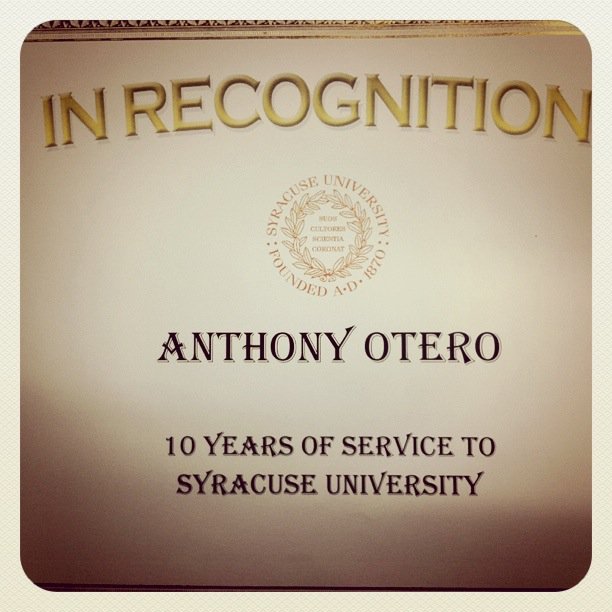
Today marks ten years since I have been in Syracuse. I came here looking for a career and I certainly found one. I left right after 9/11 and it was such a blessing to have an escape from all the death and sadness that was in NYC at the time. What I do not mention is that before that fateful day, I didn’t have a career, I had a job that I did not like. So still being here after all this has been both a blessing and curse.

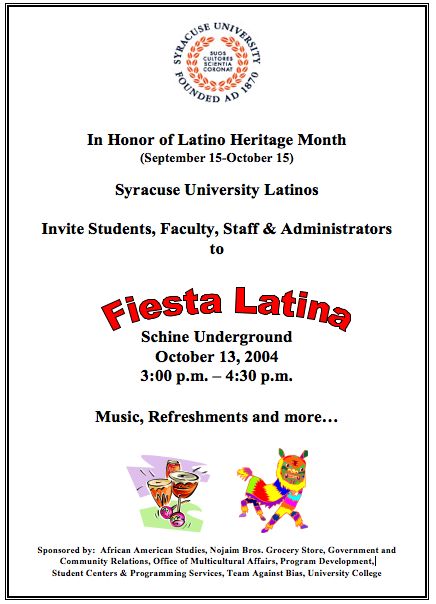
2004 Fiesta Latina

I learned early in my twenties that being laid off is not just something that happens to older people. I worked at Deutche Bank back in the late 90’s when they acquired Banker’s Trust. When the merger was complete, I watched my supervisor get laid off and then a few weeks later, so was I.  As an admin assistant,  I was getting paid pretty good right out of college. I had gotten my own apt in the Bronx and was living with my girlfriend at the time. So when I go laid off, it was a shock and I had finding a job was incredibly hard.

I landed in a place called MHN (Mental Health Network) and it was job that I liked at first, but it became repetitive. However, I loved the area in which I worked. It was right on Wall St. The World Trade Center was right there and so was the South Street Seaport. I could buy anything and eat anywhere. The job itself was boring to the point that I restarted one of my older blogs and I taught myself HTML. One day, in August 2001, I get a call from my buddy (@panthbro). He tells me that department I worked at when I was enrolled at Syracuse was hiring and I needed to jump on it.

Without hesitation, I did just that. I get an interview, which included a presentation and meeting with several people, and I knocked it out the park. The following tuesday was 9/11 and I knew that this was going to be my last month in NYC.

Making sure my students work lol

I get to Syracuse in October and it was all trial by fire. I worked a concert on the very first day, which turned out to be a 14 hour day. The group was called Everclear. Never hard of them and barely hear about them now. That weekend was a dance party. A fight broke out that practically clears the room. I ran right into the middle of the brawl to grab students, who work for me, out of harms way. This was when I felt pepper spray for the first and only time.  At that time, our Public Safety Officers didn’t carry guns like they do now, they had cans of pepper spray. That was fun to say the least. No one who worked for me got hurt.

I worked hard to get to know the students. I specifically looked out for students in La LUCHA. This is when I met @theJLV. By the end of the 2002, I was their advisor, thanks to him. I had also noticed that Black History Month was being celebrated the way it should be, but nothing was really being done about Latino Heritage Month, outside of La LUCHA.  So, I tried my hardest to bridge the gap between Latino students and faculty/staff because there weren’t many of us then (and there still aren’t many of us now). I created the Latino Listerv to start building those bridges. I worked with the Office of Multicultural Affairs to generate a calendar for Latino Heritage Month. I also started Fiesta Latina in a conference room when it was just a mixer in 2003.

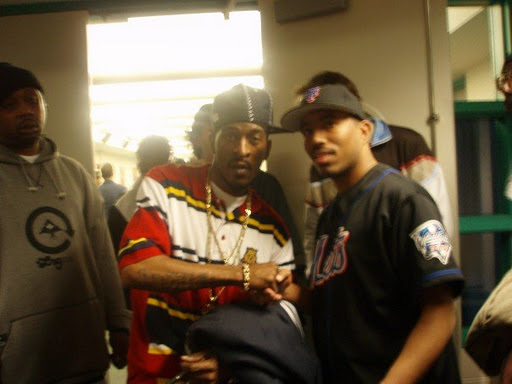
I even met Rakim!

Over the years, I have seen many things. I have seen students come and go. I have seen staff who have been hired, fired, retired, and just plain lose their minds. I have witnessed change from inside and out. There were times in which I wasn’t sure I was going to have a job anymore, but I endured. I have seen Syracuse University at it best and at its worst. I have seen blatant racism that has but tears in the eyes of my students and I have seen the election of the first Black President.

I have made sacrifices. I got married and divorced in those 10 years and I have endured. I have seen how successful I can be when I can out aside my issues and just be me. I have worked hard on my image and continue to peruse a path that is better for me. I have gained weight and lost weight. I have taken classes and started this blog that has allowed me to rediscover myself. I have created and presented workshops that benefit the student body. I have cultivated student leaders and have been a psychologist to others (some of them call me dad…I swear I am not that old…right?). I try to be the best supervisor I can be. I teach them to be the best they can be in a thankless environment.

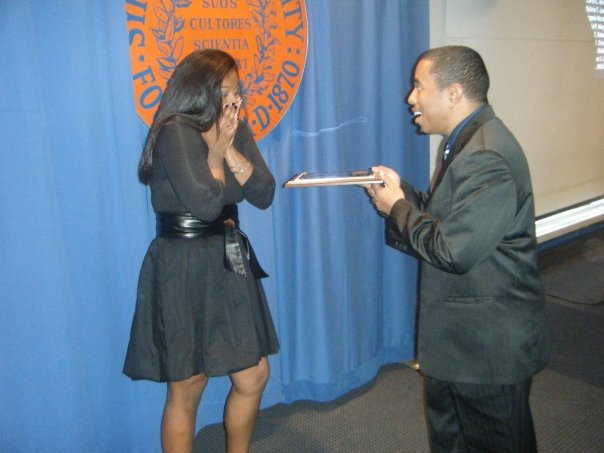
I support my students! 

The most important thing is that I do love my students. I want to be the person that should have been there for me when I was in their shoes. They have taught me so much and it is because of them that I have truly learned how to be humble. I do my best to follow those who have graduated. I know that I have made it public knowledge that I want to return to my hometown of NYC because I feel it is time. Yet, something keeps me here. Whether it is the economy or just fate, I will continue to strive for something better for myself and the student who are in my lives.

In the end, I am just glad that I have maintained my sense of self and…my sense of humor.

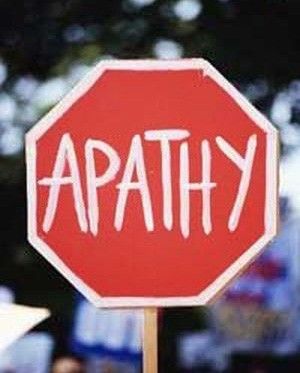
Latino Student Apathy or Entitlement?

I wanted to the last two posts about Black in Latin America to ferment in the minds of my readers. I think it is a lot of information to take in even if you have seen the series before. This is middle of Latino Heritage Month and I have been on that steady mission of educating people on how” our rich culture is.

Sure, I have focused my energy on Afro Latinos. That is to be expected. I know that is the buzz word now and almost the “in” thing to do for most. But, I take this seriously because I feel I am learning with everyone else. More importantly, Latinos come in all colors and shapes and that is something that we need to hold on to.

What frustrates me is the lack of interest that I see amongst Latino students. People want to just call it apathy but, I want to call it entitlement. I realized after seeing fellow Syracuse University alums this past weekend during Coming Back Together 10, that our past cannot be ignored. The struggles of our people before us cannot be overlooked because it is because of them that our brightest youth are where they are. Yet there is this sense of entitlement because there is nothing for these students to fight except for each other.

I wondered how these same students at Syracuse University felt if we just stopped celebrating Latino Heritage Month. I am sure there will be complaints about how unfair it is because there would be no programming exclusively for them. But, would they really complain outside of missing our annual Fiesta Latina? Sure, I personally fought to have this month celebrated years ago, but it pains me to see these same student take it for granted. I know how Moses felt when he broke the commandments after seeing the Jews break every last law and take their freedom for granted.

So where does the sense of entitlement come from? The fact that these students have everything they need. Social Justice takes the shape of canned food drives and tutoring students as part of a job or a Fraternity/Sorority philanthropy. While those maybe important, the idea of education of their own culture becomes less important quite simply because they don’t have to. It is not their core curriculum.

I shake my head at the students who tell me that they didn’t know what was going on which is just an excuse. We should all make it our business what is going on either on the campus or in the world in general. There were plenty of Latino Heritage Month calendars going around, but I am quite sure that students know when the next NPHC or NALFO party is. I am sure they know when the next party is on Marshall Street. I am quite sure they know when Jersey Shore comes on MTV. They will plan their social time and studies around those.

So what now? I will continue to do my workshops and promote workshops because they are important because if one student is positively effected by our programming, then it is worth it.

LHM: Black in Latin America – Dominicans/Haitians

Out of all the four documentaries in this series, I knew this one would be the most popular. In this series, this place called Hispaniola or Quisqueya is the only place that two cultures are compared in such a way. Black in Latin America: Haiti and the Dominican Republic is billed as the story of one culture in denial and the other in love with its independence.

I was so excited about this workshop, which was last Saturday, that I invited a very special guest, Dr. Silvio Torres-Saillant. He is the intellectual that appears in the 13th minute of the episode. Dr. Torres-Saillant is a professor at Syracuse University that always amazes me with his intellect. The other person with this particular subject was fellow blogger and SU Alum, Jose Vilson who lives in both worlds being Haitian and Dominican. I figured I had my bases covered. Little did I know that Dr. Torres-Saillant was about to bring it.

First the highlights:

  • The people of Hispaniola have shared the island for over Five Thousand Years
  • Hispaniola was the first place to import African as Slaves.
  • Dominicans are proud to a mixed raced society and Haitians are proud to be black.
  • Santo Domingo was founded in 1496 by Bartholomew Columbus.
  • Most Dominicans consider themselves Inido.
  • The motherland for Dominican Republic is considered Spain
  • Sambos represent what being black means.
  • One of the first sugar plantations was in the Americas was in Nagua.
  • Sugar production did not last long in Santo Domingo within Century the production was centered around Brasil. Cattle Ranching became means to survival
  • Cattle Ranching plantation worked differently than other plantations due to the nature of the work. The master/slave dynamic was different. There was almost an equal footing.
  • The collapse of the Sugar Industry lead many whites to leave Santo Domingo. This left people of color to basically fend for themselves. They maintained loyalty to Spain.
  • There are some musical customs that contain African Roots and have been around for 500 years.
  • Haiti occupied Santo Domingo in 1822
  • The Haitian government had a profound effect on the Dominicans such as trying to change the language from Spanish to French and making changes to religious practices.
  • The Dominican Republic gained independence on February 27, 1844
  • Dominicans reject everything that was considered Haitian, including, in many ways, their skin color.
  • Dominican elite tended to “whitetify” historical figures if they were too black.
  • Years later, Haitians become migrant workers who did jobs that Dominicans would not do. This gave many Dominicans the notion that they were in a higher class than the Haitians. The imported tens of thousands of Haitians.
  • Blackness became a Haitian trait and a negative term in the D.R.
  • Rafael Leonidas Trujillo was a dictator who did more to harm relations between the people on the island than any propaganda or slanted education did. He declared Santo Domingo to be a white nation and hid his own dark features. 

At this point the documentary begins to focus on the Massacre River and how over 15 thousand Haitians were slaughtered there. So to expand on this point I simply looked it up. Dr. Gates mention this happening in October of 1937, which is true, but the event itself was across the island and lasted a week.

Trujillo did order what is known as the Parsley Massacre or, in the Dominican Republic, as El Corte (The Cutting), in which the Dominican Army killed Haitians living on the Dominican side of the border. They massacred 17,000 − 35,000 Haitians between October 2 and October 8 of 1937. To avoid leaving evidence of the Army’s involvement, the soldiers used machetes rather than bullets. The soldiers of Trujillo were said to have interrogated anyone with dark skin, using the shibboleth perejil (parsley) to tell Haitians from Dominicans when necessary; the ‘r’ of perejil was of difficult pronunciation for Haitians. (I got this from Wikipedia)

This fact alone was not thoroughly explained in this episode and becomes a unique point with Dr. Silvio Torres-Saillant. He explained that although he enjoyed this episode and being a part of it, there is only so much history of a country that can be explain within an hour (24 minutes for the Dominican Republic to be exact). He goes on to explain that he Dr. Gates had a story to tell which slants this view of Dominicans not wanting to be black thus making Haiti this proud race of people. Dr. Torres-Saillant makes evidence of this when he points out that Dr. Gates refers to the Haitians in having a “extraordinary rich and noble history.”

Before I continue, I need to mention that we did watch the entire episode. Due to time constraints and the point I want to make here I wont go into the Haitian side of the story because quite frankly, it was not discussed largely because we talk more about the racial views of the Dominican Republic. Of course I talk about being amazed by this episode and how it shows racial views as how we know it. Jose Vilson comments about his own struggle of racial identity before being comfortable with the term Afro Latino. However, it was Dr. Torres-Saillant that made everyone in the room what to read more about the extraordinary rich and noble history of Santo Domingo.

Now where in the documentary does it state about the numerous rebellions of the Dominicans Slaves. He begin to explain about the first major slave revolt in the Americas occurred in Santo Domingo during 1522. He talked about how many of the slaves managed to escape to the mountains where they formed independent maroon communities. This was something that I did not know. I was floored by this. Dr. Torres-Saillant said he mentioned this to Dr. Gates, but this was not included in the episode.

It comes down to this, and this is a summarization, it is not whether or not Dominicans say they are black or not. They know that come from Africa. It is in the culture. It is in the religion. It is in the music. There is a part about about voodoo being practiced in Haiti, but many of those same things are also practiced by Dominicans in very similar ways like we saw in Cuba. Dr. Torres-Saillant points out that he is not interested in what people say but rather he is interested in what people do. Dominicans do black things. However, it is a type of “black” they are rejecting. They are rejecting the negative types of black that has been instilled in them.

When I had a chance to talk to Dr. Torres-Saillant afterward, I mentioned to him that although I am not Dominican, it seems that my family rejects this notion of blackness too. I told him how my grandmother once told me I should not date a black woman. He is response was eerily similar to my fathers. He said to me that it is not an issue of weather your family is racist, it is more the fact that image of blacks in this country is so bad, she doesn’t view you in the negative way that black people are being portrayed.

He then gets technical and says that in reality we are all the same. Skin color is based on the human body’s need to adapt to different conditions around the world. Culture is what people really fight about but they connect culture with skin color in America. Black is not viewed in the Dominican Republic or even in the Caribbean the same way it is viewed in the United States. It is only when you are forced to identify yourself do you reject or accept the choice given to you. That made me realize something else, this episode never talks about American influence in Santo Domingo. Trujillo was an American backed dictator… again, very similar story to Cuba.

Yes, Haiti was the first black independent commonwealth in the Americas and it is very inspiring to many black people, but this idea that Dominicans just accepted the assimilation of the European ways is completely false. More importantly, the 22 year rule of Santo Domingo by Haiti give many Dominicans this notions that the two people were completely different. In realty, two sides of the same country split in half by two different ruling countries sparked divides that exist today.

LHM: Black in Latin America – Cuba

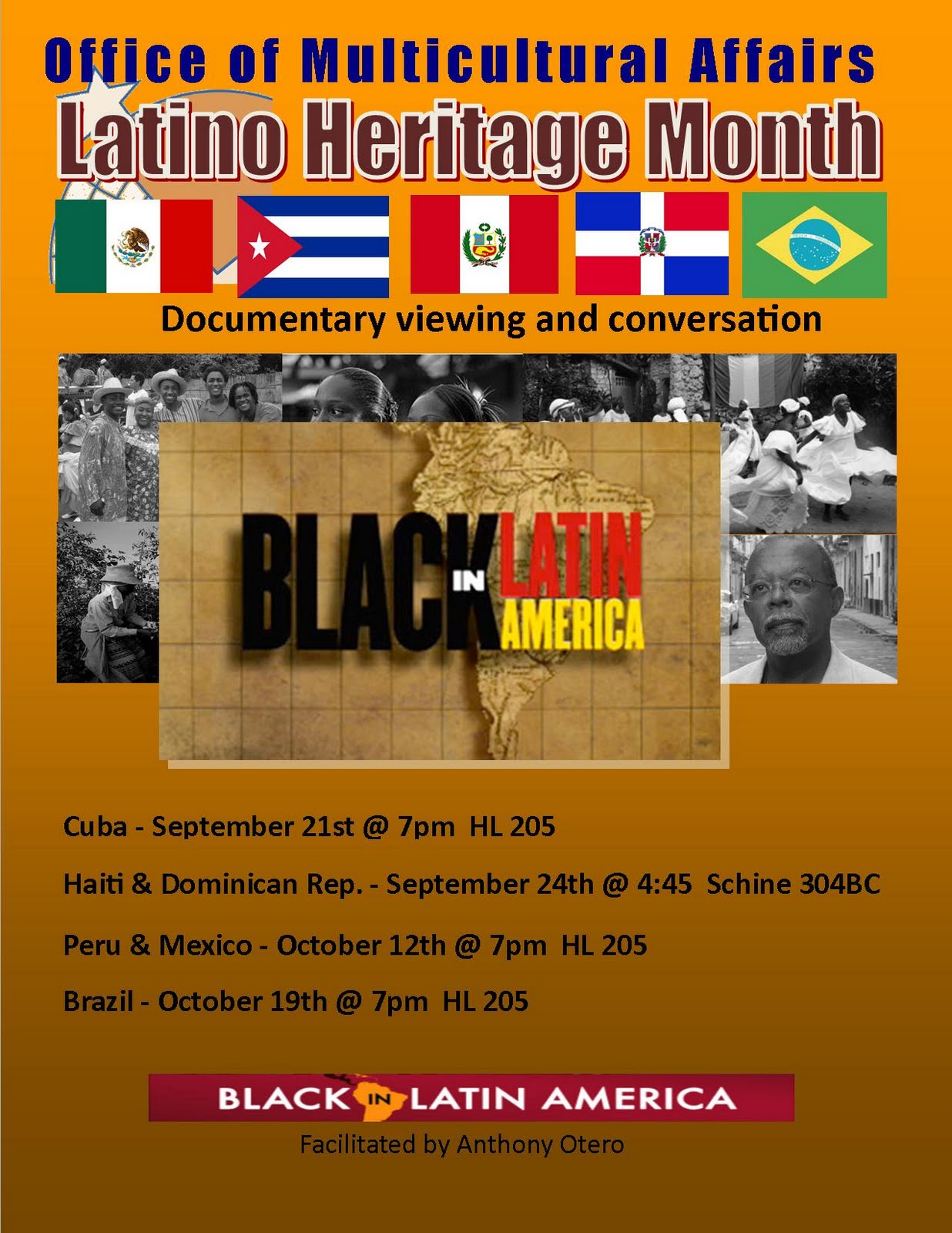
As I mentioned earlier in the month, I am hosting four workshops on the PBS series called Black in Latin America.  This was a documentary that was ground breaking in the way it showed the rich history of Afro Latinos in the Caribbean and South America. Last night, I hosted the first. I showed the the episodes on Cuba and although the audience was small, it was well received. For those who did not see it :

I took some notes of interest that stuck out in my mind when viewing this. These we also discussed when the viewing was done.

  • Cuba received over a million slaves from Africa. That is double the amount than the United States
  • The Haitian Revolution caused a shortage in sugar production in which forced Cuba to fill thee gap that lead to hundreds of thousands of slaves being shipped in order to meet demand. Whites feared a possible revolution in Cuba and because of this, plantations were operated like prisions.
  • By 1825, all of Spain’s colonies were independent with the exception of Puerto Rico and Cuba. The sugar industry was too profitable for Spain to lose
  • Carlos Manuel de Cespedes made the “Grito de Yara” on October 10, 1868. He declared his slaves free and this started a 10 year war.
  • Antonio Maceo and Jose Marti believes in a Cuba for Cubans and the Spain was trying to break Cuban unity by making race an issue in war.
  • Cuba abolished Slavery in 1886, 21 years after the United States

The documentary does not get too much into the Spanish American War. But it it interesting to point out the United States influences when it comes to racial policy. That can be seen with political cartoons of Cuba being defined as the “black child” of the United States.

It was at the mid way point when showing this documentary that students really got into this. When we wrapped it up, there was a mention that this type of information is not readily available. How else could they learn this information because history class is certainly not providing that.

  • Pedro Yvonnet and Evaristo Estonez (not mentioned) formed the Independent party of Color in 1908. This lead to the Cuban governmant massacring 3000 Afro Cubans in 1912 when they staged a revolt.
  • Son was considered black music and thus declared illegal but was declared a legal in 1925 by President Machado
  • The Cuban Revolution was on 1 January 1959, when a rebellion army lead by Fidel Castro overthrew the US-backed Cuban dictator Fulgencio Batista. The wars lasted 5 years. (much of this detail is not mentioned)
  • Castro declared Cuba to be free of Racism.

There is was a lot of talk after the viewing that Castro is viewed as this evil man, yet healthcare and education is free to everyone in Cuba. He made it a point to wipe out illiteracy as best he could. However, the USA has view of him as an evil dictator who aligned with the USSR when the embargo was placed on them. It is, of course, a matter of perception. It is no secret that Castro’s revolution lead to many White Cubans leaving the island and migrating to Miami.

  • The collapse of the Soviet Union lead to the loss of 6 Billion Dollars to the Cuban economy. That is about 80% of trade and over 50% of the GDP. This loss of money made racial inequality glaringly obvious.
  • Money from abroad (families in Miami send money to families in Cuba) is one reason for racial divide. The other is the currency: the peso vs the CUC.

It has always been my belief that Cuba has always been a racist country. One person int he documentary points out “Prejudice never went away in Cuba, it was just pushed under the table”. The reality in Cuba is the more class issue that has race written all over it. It just so happens that the rich are White and the poor are Black (as it oftens is).

Another thing that was discussed was Hip Hop in Cuba. It is very interesting that music of “Black” people can be under a certain type of scrutiny. I view Hip Hop to be just like Son in because it speaks to the poor and underrepresented.

I enjoyed showing this episode and will be showing another one this Saturday. I expect a larger crowd as we view and discuss Haiti and the Dominican Republic.

LHM – Musica Latina

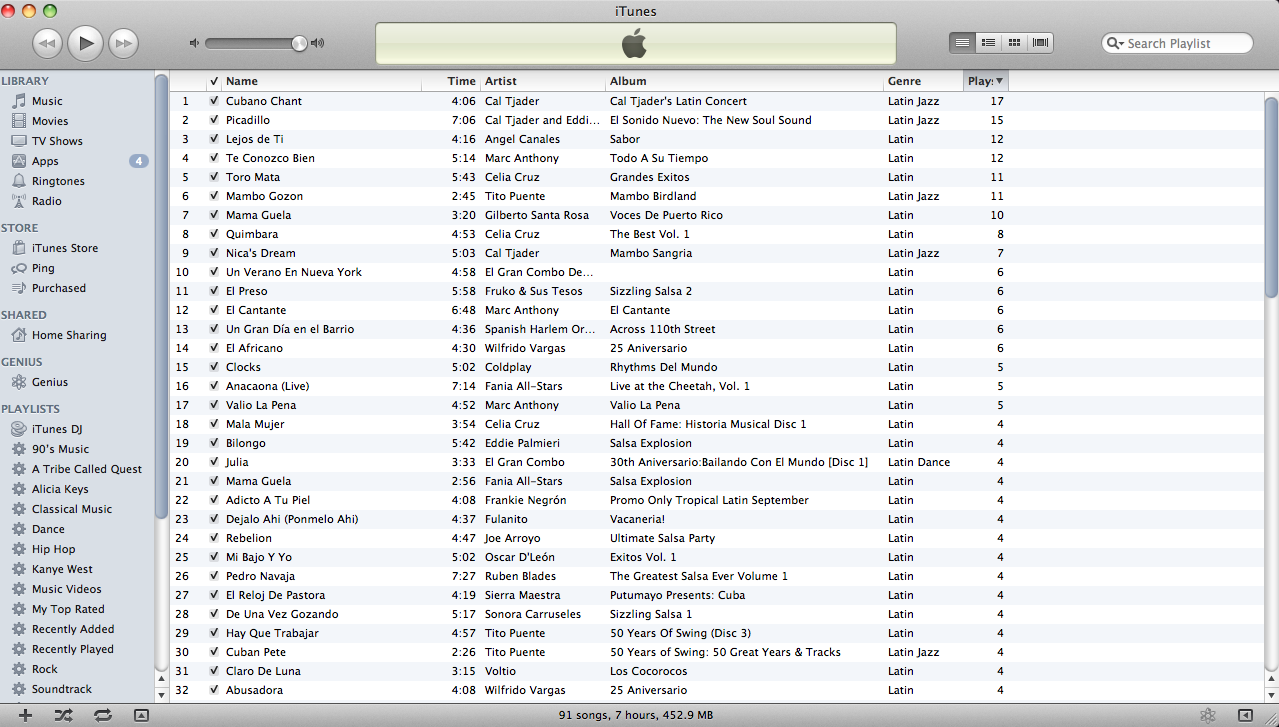
I will never have the type of music collection that my father has but I try my best with the limited knowledge that I have. When I originally thought about writing yesterday’s blog, I was more thinking about the picture above. I love listening to Musica Latina, which is clearly not limited to Salsa.

I often find myself searching for music that I grew up with while trying to keep in touch with music that is current. The jury is out on which is more difficult for me. I am often reminded that I live in Syracuse in which diverse music gets lost somewhere.

However, as the above picture shows, I am have a pretty decent playlist. The unfortunate thing is that I lost a lot of data and a few songs when my PC laptop died earlier this year. That has not stopped people from asking me to create CDs for them. I have put together some pretty decent playlists together of Latin Jazz, Afro Cuban Jazz, Salsa, and sometimes Merengue. I do have some Reggaeton but that is something that I cannot get used to.

I am a fan of the old school Salsa. I like the big band sound which is why I have a serious appreciation for Jazz and Classical Music. People laugh at me because I love musical scores from movies like Inception and Star Trek (as only two examples) but it has so much to do with the composition and way all instruments come together to sound so amazing.

Of course, I would be remiss to not mention how much I love the drums and the Afro-Caribbean sounds of Musica Latina as a whole. There are several songs above that I could point out as something so groove inspiring that dancing in my seat while listening to it at work is an absolute must.

Even though I do love live music. I have no problem settling for my ever growing music collection. I make it a habit that when I visit my dad in Florida to jack some of his CDs and copy them on my iTunes. More importantly, he as this device that allows him to create a cd from his vinyl collection. I may have to convince him to let me copy a few (like 20 or so) CDs to add to my collection.

LHM – Fiesta Latina

I have to admit that I certainly love salsa music and I am completely psyched that Fiesta Latina is happening this week. This is an event with music and food. I think about my early years at Syracuse University when I noticed that Latino/Hispanic Heritage month was barely a blip on the calendar. I wanted do something that would remind Latino students of home.

When I lived in the Bronx as a kid, my father would often take me to these fundraising dances every year in Co-op City. The funds would go to The New York Emperor’s Stickball League. To say that my dad took me to these events is inaccurate. I worked them. This was probably my first taste of what working events was like. I either served drinks from the cash bar or I worked the coat check. In either case, I was privy to some of the best salsa I have ever seen. More importantly, I realized how much better live salsa music sounded than when my dad played it on his record player.

What never gets old is the bass. The constant beat that you feel on your feet when you are on the dance floor. The rythm that you can practically feel in the airwaves. When I did coat check, I could feel the beat from coat room. I remembered all this when I first came up with the idea of Fiesta Latina. I wanted students to come to an event that they can dress up and dance the night way much like their parents did at one point or another. My goal was to have a live salsa band and, at the time, it really didn’t matter who played.

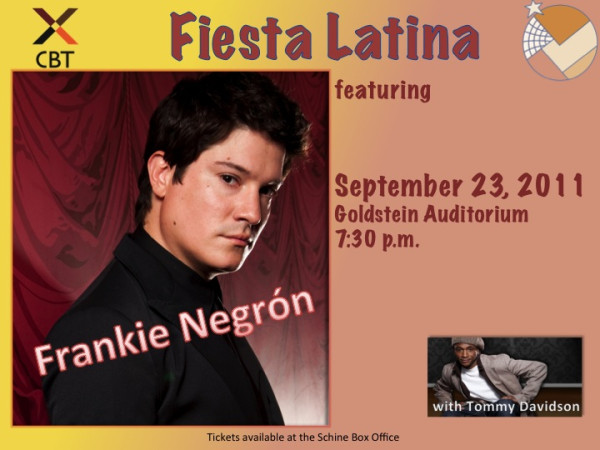
I also made it a point to make sure the dance floor is big enough to accommodate the hordes of people that will be dancing to our featured guest, Frankie Negron. I feel as if I have promoted this event to no end and I will continue to do so until it is over. The food will be on point, which is something that is always understated.

Now I am less than a week away from seeing the best Fiesta Latina yet. Over the past eight years, this event went from a reception in a conference room to a sold out event with music and dance performances in one of the largest venues at Syracuse University. Sure, I had help. I wont say that it is all me. The Office of Multicultural Affairs has taken this idea from the inception and ran with it. I am just glad to be here to see where it is going.

Latino Heritage Month 2011

It has taken me more time than I am willing to admit to decide whether or not to do another Latino Blog Challenge. The problem is that I haven’t been able to come up with 30 new topics. Not to mention that I am more busy this year as opposed to last year. What I do intend on doing is to post strictly on Latino Heritage related things during this month. This may not be a challenge, but I intend on writing about what I learned this month as well as the various things that are happening at Syracuse University.

First and foremost, I am facilitating four workshops on the PBS documentary Black in Latin America. This was a phenomenal documentary that aired last spring which brought to light many things. I posted a blog about Peru in particular. The workshops are basically viewing each episode and then having a conversation afterwards. I will pose some critical questions about each to engage the audience. The flyer above is something that I want to remember because I do not get a chance to do things like this very often.

I am happy that I do get this opportunity because last year I contributed to this month by being the keynote speaker at Utica and it should only be right that I do something at the very school I work for this year. But this is not the only thing that I am involved with this year. I have been working hard to promote Fiesta Latina coming up on September 23 with our featured guest, Frank Negron. I remember about 2 years ago he came up to a festival that the city of Syracuse was having and he rocked the place out. I had tweeted him if he would be interested ever coming back to play for the University and he said he would. That started the ball rolling in terms of trying to get the funds and the planning down. I am excited that he is performing at the Schine Student Center. He will be our biggest Salsa artist to date on this campus.

This year we have two commemorative speakers that I had the pleasure of selecting. The first is a very good friend of mine Carmen Mojica. She has guessed blogged here before and she currently has two books out. One is Hija de Mi Madre and the other is Odas de la Mujer de Miel. I would suggest everyone support her and her writings. I am looking forward to her lecture. The other woman is Michele Carlo, author of Fish out of Aqua. I read this book in March and it is fantastic, so much so that I needed her to talk about her experiences as a Latina growing in New York City. I will do a book review in the upcoming weeks.

Finally, I am beginning my Being Afro Latino Project. I announced this on my tumblr account. The first stage is looking for a few people who are willing to help with posting on the on that blog as well as on the twitter account. I have come to realize that two people (me and Bianca) cannot represent all Afro Latinos in our works. Opening it up to people is the best way to go. So the message is this: 

Are you interesting in being a contributor to the Being Afro Latino Project? We are looking for intelligent and willing volunteers to post various pictures and articles on the Latineg@s Tumblr account as well at the @BeingAfroLatino Twitter account. If you are interested leave us an inbox message stating why you think you would be a great asset to the team!

This will be a good month! 

Always Get a Second Opinion

Apparently Not…

Today is one of those days that I can’t believe happened. My ability to question someone and their expertise was on full test mode and when it comes to money we always have to make sure we get what we pay for. When it comes to cars and taking care of them, special care has to be made or the likelihood of getting ripped of increases.

Let’s make one thing clear, I love my car. It is symbol of my personal freedom to come and go as I please. I can control how long I stay somewhere because I do not have to wait for anyone. I have had my 2007 Hundai Elantra for 6 years and it has given me very few problems. One thing about owning a car is the annoyance of finding the time to get it inspected every year. This is very necessary because safety trumps everything else. However, being that I can be swamped with working events and money is an issue, it can be difficult to find time to get the inspection done.
So this week, I told myself that I am going to just get it done. I set an appointment for this morning at 8am and dropped off my car at Pepboys. I have been a loyal customer over the years with oil changes and inspections in the past, so today should be no different. I was nervous though, because last year I barely past inspection and I knew I had to get my brakes fixed. I got lucky because last October Cole Muffler had an unbelievable sale on brakes and brake pads. It was one of those things that I knew I could not pass up and since I had the money, I went with it. I ended up replacing all 4 brakes and the pads, plus all 4 routers, and got 2 new set of tires for $900. A lot of money…but for all the work that was done, it was a bargain.
Fast forward to today. I was praying that I passed this inspection. I know my car runs well, but some times you just never know. So I get the phone call from Pepboys telling me that I failed…badly. I am dumbfounded and pissed. The guy tells me that there are several concerns (which I wrote down). He tells me that my tie rods are bad. I have no idea what these are but they effect my allignment. Not all of them are bad but when one goes then they all have to be replaced because it also means I need a realignment. Then he proceeds to me about my BRAKES. The back set is stuck to the router and according to him, it is a safety issue. The best route, in his opinion, is to replace them although he could just clean them too. Then he tells me that my serpentine belt has a crack and there is problem with my sway bar that may have to rectified.
I am just quiet. I asked how much. He quotes me Ten Sixty Seven plus tax. I say…”you mean like, a thousand sixty seven???” I told him that will not work. So I begin to look at my options. The brakes and the tie rods will cost me more than $700. I keep repeating that I would rather the brakes be cleaned and not replaced because I just had those fuckers installed less than a year ago. So then I decide to just say fuck it, let them just do my oil change and I will figure it out. I was late to do my inspection which means they are taking the sticker off.
So I talk to my friend Casey (aka @panthbro) and he reminds me that I did get these brakes done by Cole Muffler. If they did do a horrible job then they have to fix it for free. He was right because I called them and this guy tells me that there is a lifetime warranty. AHA! My day was looking up already. I head over to Pepboys to get my car, pay for the oil change and drive it down the road to Cole. I explained the situation and he (Nick) was already looking at me like something isn’t right. He assures me that we will look at it right away and then tells me that more than likely I was almost ripped off. 
Cole saved the Day!
I leave to go back to work and 10 minutes later…Nick calls me. “Sir…there is nothing wrong with your car. The brakes do have to be cleaned and we can do that here. By the way, your tie rods do not even give one inch.” I almost did a cartwheel. He quotes me a price of $81 for labor and the inspection fee (which is $21). Before he hangs up, Nick says to me that I should report Pepboys to the BBB. If you don’t know, by law, no one can make a false inspection on your car. The fact that Cole can give me my inspection sticker shows that they put their name on the line when it comes to the customer’s safety.
So I pick up my car before they close and Nick is there telling me that this isn’t the first time that he has heard Pepboys doing such a thing. He seemed like a cool everyday guy and I remember not getting that cool feeling from anyone at the other place. It was more like drop off your car and wait kinda deal. It turns out that Nick charged me even less than he quoted because the brakes were not that dirty and it didn’t take that long to clean so he charged me half the labor. My total was $51. 
Which bring me to my point. Question everything! Get a second opinion! You never know what may happen.  I was freaked out and thinking about how I was gonna get the money to pay this. Cars are something that people depend on and because of that it makes us easy prey for those trying to make a quick dollar. 

The Day I Learned How to Cry

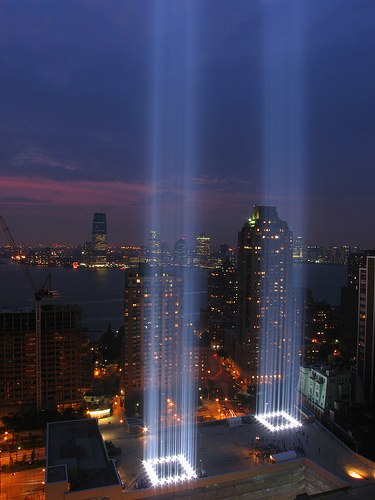
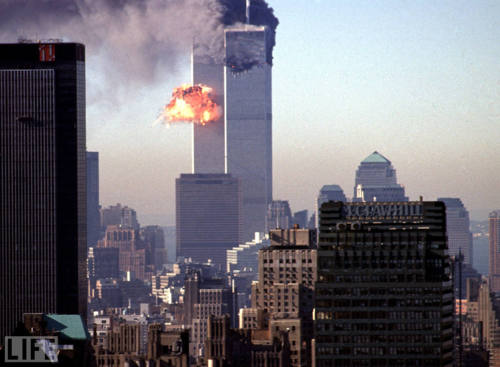
The world changed ten years ago. It was a shift in the American paradigm that we are all still getting adjusted to. I can barely remember life prior to September 11, 2001. I do know that nothing has ever been the same. Everything that was our way of life changed when those towers came down. I learned the value of life at the same time as I learned what the value of a symbol is. The World Trade Center was that symbol of New York City that has forever been altered and because of that, I learned how to cry.

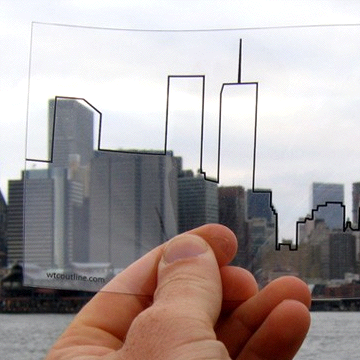
In many ways, I have considered the New York City skyline ruined. I feel that the World Trade Center was a vital organ like an arm that was severed. NYC is an amputee of such cruel intentions. I cannot tell you how it felt to know people who worked in that building and the relief to learn they got out. The company that I worked for lost entire floors of clientele. In the end so many people died and I can say that I knew one of them.

I wont talk about being on Wall Street that day because I have told that story. I feel that I can recite that story because I have said it so many times. What I have not written about is how from that day on the ability to cry has become all too easy for me. I spent most of the day being strong and trying to survive while not trying to really take in the enormity of the day. Seeing the shock on everyone’s faces as I walked from the financial district to Grand Central station. Taking the 6 train back to the Bronx in the quietest subway car I have every been on. Then getting to my small basement apartment in the Soundview section of the Bronx where I can still see the huge pillar of smoke to remind me of what happened.

Finally getting home to watch the television to see what happened. Watching it over and over and over again because seeing images from small screens in Manhattan did not help me realize. Something was building up inside of me that finally broke when I spoke to family and friends who told they loved me and thought they would never see me again because of all the chaos. I cried. I cried like I have never cried before. I still get tears in my eyes when I think about it.

All my life, I have fought the notion that a man should not cry. But how can a man hold in emotions so strong when thousands of people have perished so close by? I learned to cry that day because I recognized the value in every thing around me. Life is so precious. I could have lost so many that day. I know of others that have lost brothers, sisters, husbands, sons, daughters, wives, and friends. I sat staring at that television for hours because I did not want to forget. I wanted to take that lesson that I learned on that day that the I could no longer live my life the same way.

I came to Syracuse 10 years ago to escape the pain that was 9/11. I could not live with the ruined skyline in the background. I had to try to start a new life with a new career. While, I feel I have been successful, I think about how the world has changed. How I have changed. I have have become sensitive to everything around me. I cannot look at fire fighters and the police the same way. I am sensitive to loud noises. I just about cry when I think about losing a loved one. It just doesn’t take much anymore.

My students sometimes call me mean when they have no idea that how sensitive I truly am. I am mean because I see potential they are not achieving because they don’t understand that we have a chance to live in a better world. 10 years later and I know I want to go back home because even though that symbol is gone, the people who survived have become the symbols of hope needed to fill the void left by the World Trade Center and the people who once occupied that building.