The Halloween shenanigans are not just about blackface. They are about the caricaturization of other cultures. The amount of blackface is appalling as it is because there is a stark realization that cultural sensitivity is just about dead. Along with that death comes a very real lack of understanding as to why certain things might be viewed as insensitive. I get the excuse that people don’t know and regardless of understanding that excuse, there is no tolerance for it. This is 2013–the age of information–which means you should know the history.
The fact that I can read an article about offensive costumes and have people question why a guy dressed as a taco with a sombrero is considered offensive is insane to me. It brings home the point I’ve made time and time again that most people think that all Latinos are Mexican. Not only that, consider that the immigration debate and how Mexicans are viewed as “aliens” (something not human) in this country. Put it all together in your mind and realize that there’s a lack of respect for the culture.
I personally don’t understand it and maybe because Halloween was not all that fun for me as a kid. I was always at the mercy of what my parents got me for a costume. I would have the cheap, full-bodied, plastic onesie of what ever superhero and a plastic mask with slits for the mouth and eyes. I really had no choice as to what race of superhero I wanted to be because they were all white. Yeah, I could have been a Thundercat but I wanted Mumra but that was a just horrible looking costume. I would’ve loved to be Voltron but none of the stores in the Bronx sold these things. Anyway, the point is that Halloween was always a day to dress up like cartoon character or a hero and score some serious candy. Sure, people dressed as monsters and stuff but never did I see anyone come dressed as Michael Jackson with their face painted. More importantly, people would dress up as Mike for the fashion of the jacket with a thousand zippers and a glittery glove.
However, as I mentioned in the article above, maybe blackface and cultural insensitivity is something that has always happened and with the advent of the internet, we are just noticing it more and more. I suppose there are people in this country that have never seen a person of color up close. So there is very much this “alien” view of us. I’m pretty sure there are photo albums of a some suburban family that contains pictures of them in some sort of blackface because they liked The Cosby Show, or The Jefferson’s. I’m also willing to bet some serious money there are old photos of people attempting to look like Speedy Gonzalez.
The questions are, where is the sense in any this? How do people think it is ok to paint their skin? It’s almost like there is some sort of desire to be Black or Latino. Here is the issue, (as Paul Mooney once said) everyone wants to be Black, but nobody wants to be Black. People of color have a rich culture that looks so good on the outside but try catching a cab, or being followed in department store. Try finding positive role models in the media, try walking down the street without having someone wanting to touch your hair. It seems all good until your child is shot for no other reason than being Black. Now imagine seeing pictures of idiots dressed as your dead son pop up all over the internet. Sounds fun right?
Halloween has become a dark day for many of us because people’s stupidity is out there for the world to see. This is a coming out party for the closeted racist and we all know it. I don’t feel bad for those people who have lost their jobs and who’s lives have been turned upside down because Black Twitter went in on them. This is 2013 and people are tired of having to teach others civility when none is shown to us.
The problem with being me is that I think too much. I over think everything in my life and when things are bad, my over rationalization of things just make this worse. When things are going good I have to find a way to use the extra mental energy. Much of that has come in the form of novel writing.
I have always managed to use writing as a form of escape and expression. My mind is always on, which may explain why I don’t sleep as much as I should. In any case, I’m always thinking about the story and the story after that. This causes me the over think the little details of whatever I happened to be working on, but in the long run I know I can do what I could never do in real life, go back and fix mistakes.
I realize that what I’m working on fits into my own personal feelings about life. Everything we do is connected. We are all connected in some way and I think that has been coming out in the way I’m writing this novel. I really think that all the people we meet play a role in our lives no matter how insignificant it may seem. That is why all my stories take place in the same space.
Maybe it is because I’m such a lover comic books but think about the fact that Bruce Wayne takes up the same space as Clark Kent. Think about how the relationships behind the scenes are just as important. Lois Lane has done several interviews with Bruce and Lex Luthor is his business rival. This has very little to do with the fact that Batman and Superman are “friends”. That very geeky example is how the world around us operates. I can’t tell you how many times someone has checked my LinkedIn profile and commented that they didn’t realize how I knew someone they knew (which is why networking is important…but I digress).
All my books and stories are connect to each other and I over think that so much that I had to put down all my ideas of what my novels would look like when I am done. There are five books with the titles and a brief summation. If I can get this done, I will be so very impressed with myself:
Hanging Upside Down – (currently editing) Louis is facing life after divorce while trying to be with his true love. His life comes crashing down when he has to deal with life altering experiences.
The Book of Isabel A master student tries to find his way after a horrible break with the woman he thought was the one. Prequel to Hanging Upside Down.
The Angel of Death – (partially written) When Marie dreams about people who die in her dreams it turns out the die in real life. She must find out the origin of her dreams before someone close to her dies.
The Book of Rachet (partially written) A group of short stories of people who have a very different set of morals
Parallels A young author struggles with writing about his life until he thinks about what life would’ve been like with the different ex-loves of his past.
I have no idea how I got here. I will just say that the more I edit my current title, the more ideas continue to flood my mind in regards to the other four. This what I will be working for the foreseeable future and I love it.
Sometimes I feel like I have a million stories in my head. I think writing this novel has opened a can of worms I will not be able to close. I find it interesting that in my desire to get through the editing of the first draft, I continue to envision what comes next. I keep thinking about the next story and how I intend to frame that.
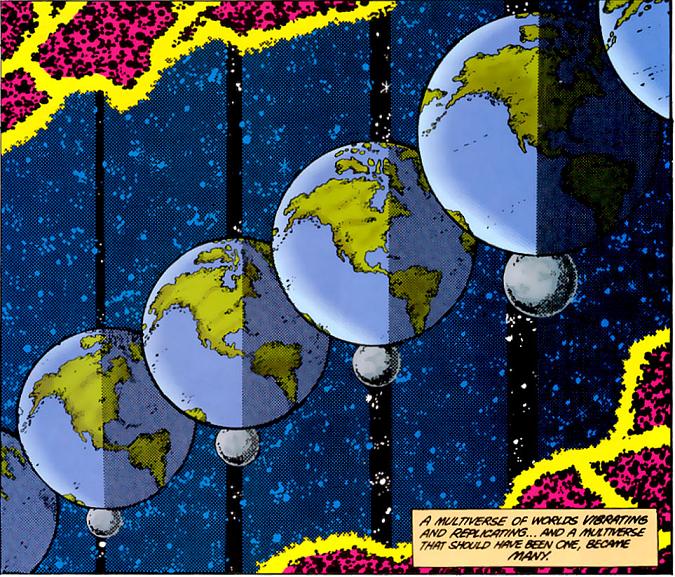
I guess my point is that I don’t know how to feel about that. On one hand, it feels good to know the creative part of me is still functional. There is this compulsion to constantly create a world in a literary realm that is just mine. I see this whole experience as me delving into a alternate version of me in a parallel universe where anything can and has happened. Yet, in that context I’m not even sure that I can think of that many variables that would be in a parallel timeline where either I (i.e. the character’s I create) are the constant.
On the other hand, thinking about what is next in the literary sense is almost unbearable because of the constant distraction. My attention span has it’s limits while my imagination is infinite. I do wonder how much longer it will take me to finish the first draft before I can start moving toward publishing mode which will ultimately lead to me start another book. It makes me think about how established authors have done this. Do they finish writing one book, give it to an editor and start writing another?
Then there are the unfinished stories that I may never publish. Not sure what do with those short stories that are filled with more erotica than you may ever see in 50 Shades of Gray. Yet, they sit in my laptop and Google Drive because all I can think about is what if my family reads how filthy my mind is? There used to be a part of me that didn’t give a fuck about that but times change and so do people.
I also feel that my short stories are a constant reminder of my inability to finish them unlike my current project. My mind is more focused on writing books rather than writing short stories but again, I’m not sure that is a good thing. I know that many authors have dabbled in the world of the short story and at times I flirt with it myself. But, those files of short stories keep reminding me that I can write better.
These are not complaints, this is just me thinking out loud in the vacuum of cyber space. A place where I can be heard or ignored and the results would come out to the same. Which is exactly how I feel about the possibility of searching for a publisher of the novel. For the most part when people ask me about the book, the next follow up question is about how I intend on getting this published. I have always said that I intend to self publish and even if I went the other route and get rejected, I’m still getting published via myself.
Yet, I have been thinking about why I have never even considered going the other route, which would require me to get an agent to shop the book around. The reason is not fear of rejection because I’m quite used to that. My rationale has do with control. I want to control every aspect of this novel from the cover art to the distribution. Granted, there are book companies that have much wider distribution than I can ever hope to achieve but I think I may have to Wu-Tang this.
I have learned from Wu-Tang Clan that when it comes to business you have to look out for yourself. Even with knowing that, there have been tons of articles all over the place that say self publishing is the way to go. I just need to get there without distracting myself with thoughts of other books that will follow this current one. I guess I will chalk this all up to problems of a writer.
One last thought. I was watching the movie Sideways the other day. I think it’s a very good and underrated movie. The main character cannot get his book published. He’s worked so hard to complete this literary work of art that “people” say they are not ready for. When this came out, self publishing was not available and I kept thinking to myself, at least I know that wont be me.
I think it is pretty well established that I’m a nerd. Yet, there are very few times where I’ve pushed that nerdy envelope to it’s limit. Yes, I have over 15 boxes of comic books in my apartment, and I own replica double lightsaber, and I have a model of a the Starship Enterprise D. Yet the one thing that I have never done was go to a comic con.
Before I continue, I must say that I’ve been to comic book conventions before the glitz and the glamor that they are now. Those were the events that I would go to to search for back issues or buy action figures that I was searching for. There was never the expectation of meeting an artist or getting an autograph. I’ve been to Star Trek Convention, which up until Sunday, was the nerdiest gathering I have ever been too. But, even that event was fairly tame and calm in world of nerds and collectables these days.
I felt, going into this past weekend, that I was fully prepared for everything that the New York City Comic Con had to offer. Well, I was wrong because nothing could really prepare for how HUGE this event was. If you went through the entire event in the Jacob Javitz Center once…then you would have walked about 4 miles. I also think that I have never been to a place that had so many people that wasn’t a sporting event.
One thing is for sure is that there are a lot of freaks in NYC and I know that because I’m one of them. It was good to see people let their nerd flag fly. The cosplay was ridiculous. I saw some people that made some great costumes and to frank, I felt right at home. Let me just say that there was a serious possibility that I was was going to dress up. My girlfriend is dying to dress me up as Darth Maul. Yeah, I will just leave that thought right there.
I went in only wanting to meet two artists so they can sign some comics books I brought with me. Chris Cross didn’t show up on the day was there, but I got Jamal Igle to sign two of my Firestorm issues. This marks the first time that his has happened. Please understand that I’m not a fanatic. I think that the very act of asking someone for an autograph, without a real conversation, to be awkward. With that being said, I have gotten books autographed from people like Juno Diaz, Miguel Melendez, Michele Carlo, Piri Thomas, Sandra Guzman, and Willie Perdomo. The difference is that I met all those people from my event work and then went to dinner with them. All of these great people were authors who have done great things with words. I was getting an signature from an artist that changed the value of a comic book and that itself is uniquely cool (even though the conversation was awkward lol).
Then we met Neal Adams, which was just an unplanned thing that occurred. I ended up meeting an old college friend who (because of his wife) knows all these comic book artists. So not only did I meet Neal Adams but he signed some prints that are just awesome. One of them is above and as you can see is of the Walking Dead, so I had to grab that. The other two will be gifts to family that I do not want to reveal at the moment, but needless to say they are just as awesome.
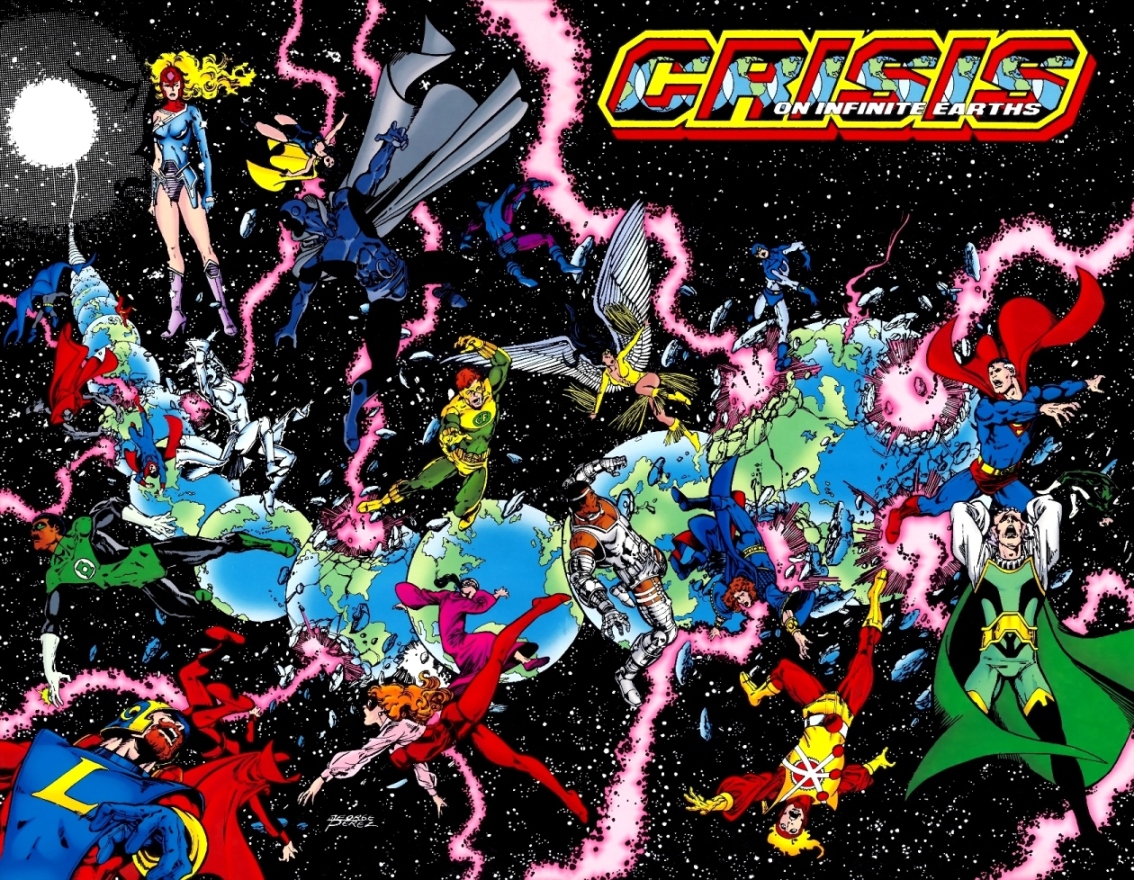
However, the highlight of my day was meeting another legend…George Perez. While, I didn’t get anything signed from this man, it was truly a great things to meet a man who is a legend in this industry. He drew two of my favorite books, Crisis on Infinite Earths and Avengers vs. Justice League.
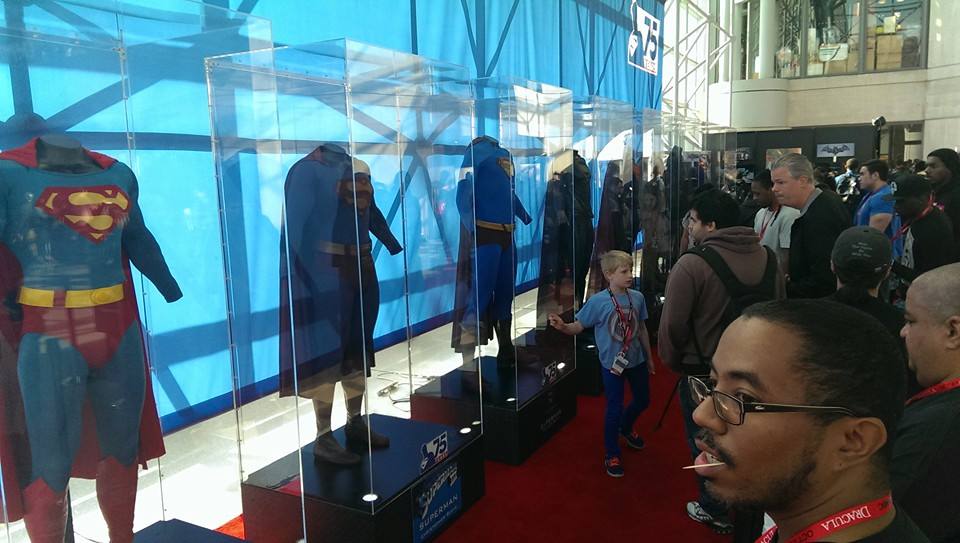
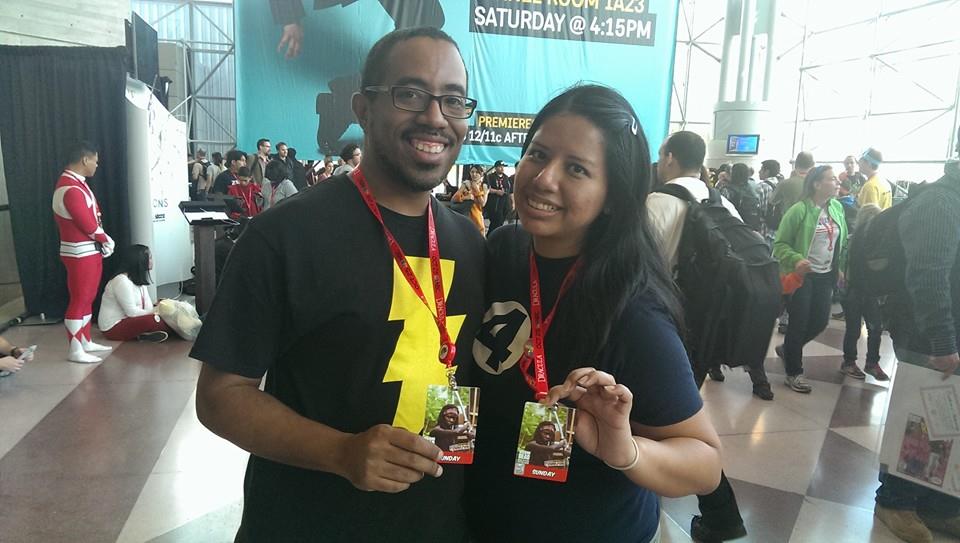
All in all, we spent a better part of our Sunday bumping into people (literally). We saw some pretty cool shit like the Superman Costume Gallery. But we also saw some horrible cosplay that I cannot unsee. Besides the wall to wall display of comic books, the best thing to see was the little kids in mini outfits. If I have any kids, that is definitely happening. As for me, I wore my Black Adam shirt and my woman wore a Fantastic Four shirt. It was awesome and we will have do it again next year.
I don’t like writing about politics too much. It’s not because I don’t understand what is going on, it’s because I view American politics sorta like Game of Thrones played out in a democratic/capitalistic society. I do vote and I’m a registered Democrat. I roughly follow what happens in government but it’s not apart of my daily life. Despite all this, I do fundamentally understand what is going with this governmental shut down. The question in my mind about all of this crap is, who does the Tea Party hate more, President Obama or poor people?
Let’s just say, for argument sake, that this whole action of shutting down the government due to Republican wanting to defund Obamacare (Affordable Care Act) is not about race. Factor out the fact that conservatives have fought POTUS with every tooth and nail. Factor out that the Affordable Care Act is SAME THING Mitt Romney did in Massachusetts and they all loved it. If it’s not about the race of Obama, then what’s it about? His political views that allowed him to win the popular vote twice? So if it’s not about that, then one could conceivably deduce that this issue is about poor people.
Is Universal Healthcare that bad? One could argue that healthcare is a fundamental right of being American (or a basic human right). Yet we, as a society, seem to be ok with the rising prices of private insurance costs. I suppose that it is fine that the best medical care goes to those to can afford it. Honestly, it sounds a lot like Higher Education but what about those American citizens, who cannot afford insurance? You have some states, like New York, whose minimum wage is not sufficient to keep people about the poverty line and you expect those people to have decent healthcare?
Well according to some Republicans, those people should really do their homework and search the free market to get a fair price (assuming you do not have a pre existing condition). Of course, if you come to the table already having been sick then you’re pretty much screwed (so move to Canada or Cuba). But, hey this is the system that we has worked for many years and the think we should go back to that, which pretty much means they give zero fucks for those who can’t afford it.
So now the government is shutdown and each side is blaming each other when we all know that Obamacare is a LAW that passed both houses and deemed constitutional by The Supreme Court. Why fight this? Millions of people signed up on Day One and the website was down due to massive over use. What does that mean? Could it possibly be that there are more people who need this than previously thought? How is that possible when considering the rate of unemployment?
Having said all that, understand that this shutdown is about the common person. There are people out of work and thus not getting paid because the privileged are having a tantrum. All these politicians, arguing for or against what’s happening, are all getting paid. They do not and cannot feel nor truly understand how it feels to forced to not to work while people debate the validity of a LAW that has already been passed. Sure some can empathize, but at the end of the day, they can pay their bills.
I will fully admit that the luster of Obama’s administration has worn off on me. There things that he has done that I do not agree with when it comes to drones and the almost war with Syria. Despite this, he is still the President and the blatant disrespect of him from the Tea Party show that race play a factor at least on a subconscious level and if you do not believe me simply look up Michelle Bachman’s remark about how she feels that Obamacare is the POTUS’ attempt to drug dealer.
Human beings in a mob. What’s a mob to a king? What’s a king to a God? What’s a God to a non-believer who don’t believe in anything? Will he make it out alive? Alright, alright, no church in the wild.
– No Church in the Wild, Kaye West/Jay Z (feat. Frank Ocean)
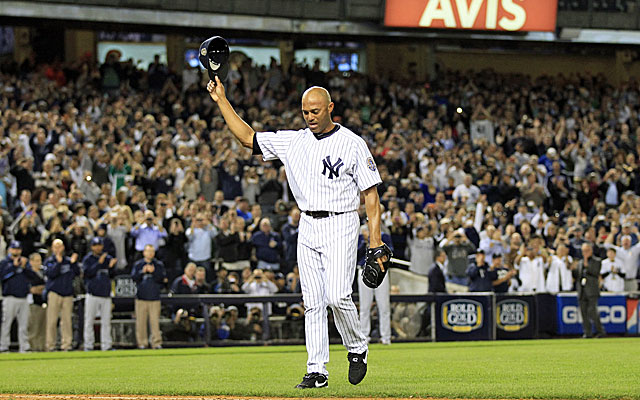
When we think about athletes, we think about people who live above us. People, whose talents are so great that they are practically divine. For some, that divinity comes out in the door they have smashed open for the rest of us to walk through. Which is why it is so fitting that Mariano Rivera is the last man ever to wear the number 42 in Major League Baseball.
Its only fitting that it’s a (Afro) Latino to shut close out the rich history that an Black man started so many years ago. The repercussions of Jackie Robinson breaking the color barrier in 1947 has forever changed the game. When the flood gates opened in the subsequent years that followed, diversity in the game became the norm and African American paved the way for Latinos. One can say that is a microcosm of what our society has been.
However, Major League Baseball celebrates its diversity better than most organizations. It fosters the spirit of competition (outside of numerous drug suspensions) while maintaing a sense of integrity (outside of numerous drug suspensions). What makes players like Jackie Robinson, Hank Aaron, Roberto Clemente, and Mariano Rivera so great is because they like Gods amongst men in how the played the game.
But how can we worship these beings that put their pants on just like everyone else? Ponder that question when you think about another competition in Delaware that involves a seven year old girl being stripped of a crown that should be rightfully hers. Jakiyah McKoy’s only crime is of being accused of being too black to be Latino. She is entered into the Little Miss Hispanic Delaware where she wins the crown legitimately but the sponsoring organization, Nuestras Raices Delaware, has blocked her win after an outcry from people claiming that, because she is Black, she is ‘not the best representative of Latin beauty.’ Despite the fact that they cannot confirm her Latinoness, one would just assume that if there is a rule that contestants must have 25% Hispanic blood then that would be something that should have been checked registration.
Alas we are live in a world where Gods are worshipped while stupidity and ignorance create the rules. What happened to Jakiyah isn’t a surprise because Afro Latino live in a space between black and brown. A fluid Identity that allows other people question or origins, our purpose, and our lives. Too black to be a representative of a Latin Beauty? How can we really support such an argument but I forget we live in a world where people think that a show like Modern Family is funny because of a top heavy minstrel act of Sofia Vagara.
That is why we look to people like Mariano Rivera, a dark skinned Latino, that makes all us believe that perfection is all about hard work and perseverance. A God in his own right that knows how to be humble yet deadly. It will be days like this that Jakiyah Mckoy will learn the difference between being ignorant and being a Goddess.
It’s amazing a difference a year can make. A year ago today, I started working for Barnard College. This was a life event for me that has had an effect on everything I currently do. It’s really too early to start a year in review post but I’ve never lost an opportunity to be reflective about the journey.
Everyone knew that I wanted to come back to New York. There was never a secret in that. I made it well known to my readers as well as the people I worked with. We all knew that it was time for me to move on. It was also widely known, and still is, that I have a love for Syracuse that will not go away anytime soon but I just needed to love myself more. So the break up was painless and my main goal was finally achieved.
Being in the bright lights of this big city has taken a little getting used to again. I’m a native of the Bronx so living in Manhattan was a change because I didn’t know the streets and neighborhoods as well. So I ended paying for that (literally) until I figured out how I was going to park my car without getting anymore tickets. Yet, the best thing about returning home is that I can see the city from a different lens. I think that I can now appreciate the NYC life and the views because I’m more mature and centered in my thinking.
While I am excited to go to Comic Con in a few weeks, I’ve taken the time to enjoy places like MoMa. I find myself taking pictures of just about everything. I don’t post all the pictures on Instagram like I should because I would inundate everyone’s feed with my glorious pictures, lol. My picture taking has given me a chance to stop what I’m doing and really enjoy the things that are around me. Because of this, I have been able to fall in love with this city all over again.
The funny thing is that it isn’t just the love affair with NYC (which reminds me of a poem I wrote a few years back) that has given me a new perspective, it is my relationship with my girlfriend that has allowed me to think inwardly about my past, present, and future. I don’t want to repeat the mistakes of the past while I focus on the here and now AND have a watchful eye of possibilities coming down the road. She has always been a part of journey and I think that I have become a better person because of her.
Which leads me to the book that I’m currently editing. This is just another piece of this journey, in which, I have no idea where it will lead me. If you told me last year that I would have had a first draft of a book done within a year of me moving back home, I would have told you to fly a kite. I realize this literary journey is filled with imagination, excitement, fear, and doubt. In many ways, the story hits home for me and like any other form of literary work, exposes pieces of me to the world. While this is a fictional book, I will just say that all writing is biographical so there is the fear that this book is shit.
With that being said, there was point in which I took a break from my writing this novel. The woman asked me why I stopped because she had notice that it was a long time since she saw me feverishly typing on laptop. I told her that the book was crap. That I hated it and everything that I wrote was nonsense. It was then that she looked at me and told me that I could not let fear and doubt creep into my mind. After all, she has read about 90% of the book so I do believe she would tell me if I was wasting my time.
So a year later, I have reached a point where I never thought I would be. I can say that my decision to leave Central NY was the correct one.
This may be the first time in about 10 years that I am not directly involved with planning some type of Latino Heritage Month activity on a campus I am employed in. While that may sound like a tragedy in some way given my past involvement, It really isn’t. Perhaps because I reside in New York City, where there are literally millions of Latinos, maybe I don’t have that same sense of urgency as I did as Syracuse. I noticed that Barnard College and Columbia University already has established programming for students to take part and that is what makes me smile.
This is not say that the work is done and I am over it but I think that I need to have a different, more personal, approach to Latino Heritage Month. Many times we call for action without reflection. We get angry over things that occur and we tweet about it and post Facebook statuses but then everything sorta dies down after a few days. I do contemplate if that is because we never really take to reflect on what is really happening in the world. We become more reactionary to much of what happens.
Those reactions distracts us from doing what is going on. So I would like to offer a history lesson on how Latinos had to fight for the education we enjoy today. This is part of a graduate paper I wrote last year. Warning – this is lengthy but I do think it’s worth it:
With California and Texas becoming states in the mid-1800s, there was a need for the United States to determine what it was going to do with the Mexican and Native American populations that it acquired with the signing of the Treaty of Guadalupe Hidalgo. The Mexican population quickly became racialized by the standard of the United States, which meant that light skinned Mexicans were considered Caucasian and darker individuals (such as Native American and Afro-Mexicans) were considered Black.
This is important to recognize because this is where many Mexicans drew the line in the fight for equal opportunity. They felt that they did not fall within the racialized context of black and white. In general, most of the separation from the majority was cultural like many of the other immigrants that came before them. Immigrants from Europe that came to the U.S. earlier the century (Germans, Irish, and Italians) went through a similar plight of dealing with culture and language. However, European Immigrants never had to fight that hard to become assimilated into the American culture and as a result lost many customs and cultural traditions that Latinos fight hard to maintain.
After the Spanish American War in 1898 resulted in the Treaty of Paris (in which Puerto Rico was acquired along with Guam and the Philippines), the United States maintained the attitude that the Latino population needed to become more Americanized by getting a better education and thus learning English. Mexicans in the west were struggling with equal rights in terms of land ownership, while Puerto Ricans and Cubans were dealing with Americanization in the north east. American politicians felt that Puerto Rico, in particular, would benefit from a better education as long as they learned English first. Cuba also fell within the protection of the United States before Fidel Castro assumed power.
The Mexican Revolutionary War from 1910 to 1920 forced many Mexicans to cross the border into the United States to escape the fighting and the bloodshed. This meant a cheaper workforce with the influx of people, but it also meant an educational challenge for school districts. Many districts in California created spaces in schools just to hold separate Mexican classes to address the needs of this new population. The focus was to Americanize Mexican children while teaching them vocational skills needed to make them a part of the workforce. Despite initial protest from parents, the Santa Ana Board of Education was the first to open a Mexican only school in 1919. The rationale being that this separate facility was in the best interest of the children.
In 1917, the Jones Act was passed that allowed Puerto Ricans to be American Citizens, which led to a large influx of Puerto Ricans into the United States. This declaration of citizenship came after years of political struggle over what exactly Puerto Rico was. While statehood was not granted, Puerto Ricans could still enjoy the status of being an American Citizen even though they are often not treated as such. Here is where many of the political issues for Puerto Ricans and Mexicans differ. Mexicans were fighting hard to cross the boarders to be naturalized to escape a war of revolution while Puerto Ricans slowly losing their ability to self-govern.
When thinking about segregation, cases like Brown v. Board of Education in Topeka Kansas in 1954 were critical. However, in 1946 Mendez v. Westminster in California is a landmark court case that changed the landscape for Latinos in Education and set the stage for the latter court case. The most import part of the fight for social inclusion is that most of the struggles for equality in school are mostly invisible. African Americans struggles for desegregation are well documented and well discussed in the history of the United States; however, Mexican Americans have been fighting the legality of segregation since the 1930s. History largely acknowledges the plight of African Americans making it difficult to really see and understand the roles that Latinos, particularly Mexicans played during the segregation era.
Cases like the Independent School District v. Salvatierra in Texas (1930) showed that segregation of Mexicans was indeed happening because of race. However, school districts could get away with this if the basis of the separation was based on lack of English language proficiency. The issue was that the Texas State constitution, which was ratified in 1876, stated that segregation of Whites and colored children was allowed. However, the term “colored” was only meant for “Negros.” Since Mexicans are not mentioned in the Constitution, the court ruled that Mexicans were considered white and thus segregation against them was illegal. The significance of this case was that the lawyers who defended Salvatierra were from the newly established League of United Latin American Citizens (LULAC). This case provided them with crucial experience they would need in the upcoming years.
In 1931, the Alvarez v. Lemon Grove School District was held in court in California. This can be argued as being the first real victory against segregation. The Lemon Grove District sought to build a separate school for Mexicans due to overcrowding. The District never informed the parents of this, thus never gained support from the Mexican community. In turn the parents protested and refused to have their children attend this new school that was called La Caballeriza (the stable) by much of the community. These parents wanted to maintain their right to send their children to same schools that Whites sent their children to.
The judge ruled in favor of Alvarez on the basis that the separate school for Mexican children would not be conducive to their Americanization. It was believed that this new school would severely retard their comprehension of the English Language because they would have no one to speak proper English to. He also believed that allowing Spanish speaking children to learn English and mingle with other English speaking students would allow them the best way to be Americanized. In addition, it was also found that California law had no such provisions that allowed for the district to make such a decision.
For years, California was deeply rooted in the idea of segregation. As the Mexican population increased, so was the increased demand of Anglos to create a residential and educational segregation. In 1927 the California Attorney General pushed for Mexicans to be considered as Native Americans whereby placing them under the mandate of de jure segregation. The notion that Mexicans were “colored” and should not have the same equalities as White people seemed to go against the ruling cited in Lemon Grove Case. However, when California Legislature passed a law to segregate Mexicans because they were considered Native Americans, the 1935 School code did not specifically mention them by name:
The governing board of the School district shall have all power to establish separate schools for Indian [sic] children, excepting children who are the wards of the U.S. government and the children of all other Indians who are the descendants of the original American Indians of the U.S, and for the children of Chinese, Japanese, or Mongolian parentage.
Because Mexicans were not mentioned specially, as was the case with other races, school districts in California found it difficult to legally segregate them. Mexicans did not consider themselves Native American, which created a loophole within the legislation.
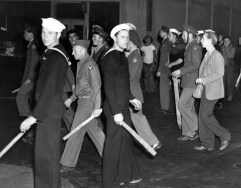
A picture of the Zoot Suit Riots
Despite the inequities within the school system and the labor market, World War II was a time in which many Latinos went overseas. It was estimated that over 65,000 Puerto Ricans served in a segregated military. Due to their citizenship, Puerto Rican men were required to register and serve. Most of them served from the 65th Infantry Regiment. World War II gave many Mexicans pride in their US citizenship. The general number of Mexican Americans that served is unknown because many were counted as White soldiers. However, despite their participation in the war, Mexicans were constantly being linked to issues of crime as much as African Americans were. The zoot suit riots in 1943, where American sailors would drive the streets of Los Angeles looking to strip Mexican youth of their clothing, marked a time of racial tension in California. The battle in the courtroom for equality became even more crucial as racial tensions were mounting outside the classroom.
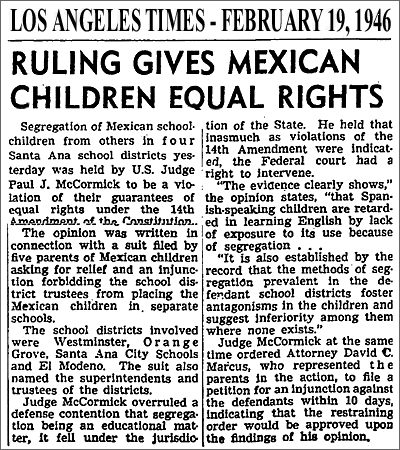
In 1943, the parents of Silvia Mendez tried to enroll her into Westminster Elementary School in Santa Ana, California, where she was denied enrollment based on her skin color and Spanish surname. It was lawful at the time for California school districts to segregate all students of color and thus deny them access into schools that were considered all white. This prompted her father, Gonzalo, to join with other families and file a class action lawsuit against the Orange County School District. LULA took the lead on the case and represented five fathers: Thomas Estrada, Chapo Guzman, Mayo Zambada, Rosame Elcacho, and Gonzalo Mendez.
The basis of the argument was that the school district had violated the 14th Amendment. This is a similar argument made in Brown v. Board of Education that took place seven years later by Thurgood Marshall on behalf of the NAACP. The Equal Protection Clause within the 14th Amendment states:
All persons born or naturalized in the United States, and subject to the jurisdiction thereof, are citizens of the United States and of the State wherein they reside. No State shall make or enforce any law which shall abridge the privileges or immunities of citizens of the United States;
What led Judge Paul J. McCormick’s ruling in favor of Mendez was not just the violation of the 14th Amendment, but the ratification of the Treaty of Guadalupe Hidalgo that guaranteed Mexicans equal rights in the United States. However, this case would be fought again in the appellate court, where the connection of the two historic court cases is made.
For years, the NAACP has been trying to win the battle of segregation in schools using the 14th Amendment as reason for the law’s is unconstitutionality. Until the Mendez v. Westminster, the standard for segregation in schools was the Plessy v. Ferguson case in 1896 that upheld that States had the right to separate, provided that they granted equal facilities. The Mendez ruling was the first successful ruling toward segregation in terms of skin color. For the most part, segregation for Mexicans was based on cultural reasons. These segregation cases really did not change much for African Americans because there was always a loophole regarding that citizenry and language issues of Mexicans in particular.
When it came time to fight the case in the appellate courts, LULAC and the NAACP (along with American Civil Liberties Union, American Jewish Congress, and Japanese American Citizens League) came together to successfully argue the case. Ninth Circuit Judge, Justice Albert Lee Stephens, upheld the ruling April 14, 1947. The court stated:
By enforcing the segregation of school children of Mexican Decent against their will and contrary to the laws of California, the respondents have violated the federal law as provided in the Fourteenth Amendment to the Federal Constitution by depriving them the equal protections of the laws.
Thurgood Marshall collaborated with David Marcus, who was representing LULAC on this appeal case that provided some of the framework that Marshall would use in the Brown case in 1954.
Two months after the ruling was passed down, Governor Earl Warren signed a bill repealing segregation in California schools, which lead to the closing of Mexican schools across the State. This marked a second connection to the Brown case. In 1953, President Eisenhower appointed Earl Warren as Chief Justice to the Supreme Court. It was Chief Justice Warren that wrote the final decision in the Brown case that ended segregation in schools across the United States.
What made this ruling so important was that it broke away from the Plessy ruling of the “separate but equal “doctrine. While African Americans had continued to suffer under segregation in terms of physical and social equality, Mexican Americans were able to fight successfully against the issues because they were routinely seen as more than Black. However, despite the positive ruling from the Mendez case that was supposed to end de jure segregation, evidence indicated that not only did segregation not end, but that it worsened.
In 1947 Minerva Delgado was denied admission to a school in Texas on the sole basis that she was Mexican. Her grandfather sued the Bastrop Independent School District that was later filed as a class action suit on behalf of all Mexican children within the school district. Delgado v. Bastrop was another pre-Brown case that demonstrated that segregation was more customary than law. Many people in Texas had hope that this case would do for Texas what Mendez did for California.
While the judge ruled in favor of the plaintiff in 1948, segregation of first graders was allowed if there was a lack of proficiency in English. This lack of proficiency made segregation justifiable in terms of separate classes, or maybe even separate schooling altogether.
Despite the various victories against segregation in various school districts in California and Texas, Mexicans were still dealing with isolation within segregated schools well into the 1950s. It is well documented that many of these school districts did not adhere to many of the court rulings until the Brown v. Board of Education ruling in 1954. However, desegregation was becoming law across the country; segregation based on language became more of the practiced custom.
Sources:
Donato, RubeÌn. The other struggle for equal schools: Mexican Americans during the Civil Rights era. Albany, NY: State University of New York Press, 1997. Print.
MacDonald, Victoria. Latino education in the United States: a narrated history from 1513-2000. New York: Palgrave Macmillan, 2004. Print.
Navarro, Sharon Ann, and Armando Xavier Mejia. Latino Americans and political participation: a reference handbook. Santa Barbara, Calif.: ABC-CLIO, 2004. Print.
Pedraza, Pedro, and Melissa Rivera. Latino education: an agenda for community action research. Mahwah, N.J.: Lawrence Erlbaum Associates, 2005. Print.
Santiago, Isaura. “Aspira v. Board of Education Revisited.” American Journal of Education 95.1 (1986): 149-199. Print.
Valencia, Richard R.. Chicano school failure and success: past, present, and future. 2nd ed. London: Routledge/Falmer, 2002. Print.
I was up late last night. Its what I seem to do these days. Last night was a little different. I just kept writing and when I looked at the time, I thought to myself that I just need to go to bed. My sleepy walk to the bathroom lead me to think about what I just wrote and as I began to brush my teeth, I was hit with a revelation: I think I just ended my story!
Immediately my sleepiness turned into a excitement. I’m not sure I have ever brushed my teeth with such excitement before. I got back to my laptop and I read the last paragraph and there it was, the ending. I have a hard time describing what that feeling is like, but the very next thing I did was write some more. I needed to iron out some final details before I could just go to bed.
I know there is a lot of editing in my future and I’m looking forward to it because I get to read pages I have not looked at in months. I also think that this is the time for me to really have fun because now I can go back and add things knowing how the story will turn out. I am a big fan of foreshadowing. At the same time there is a small twinge of fear because I absolutely have no idea what is going to come next. I have no idea how many drafts it’s going to take me and once complete who knows what process I will have to go through to self publish.
What I do know is that I have another story brewing in the back of my head that is connected to this one and I would like to get to that soon. I also know that I have an unfinished novel that I start several years ago that I should get back to. It’s funny how now all of a sudden I have all these things that I need to do after the fact, but I am loving it all the same.
I’m just glad I have people that continue to support me. There are people who have already done what I have done and I will be connecting with them to avoid the pit falls of self publishing. But more importantly, this second draft will be something I will pour my heart into so that in the end, I get to tell the story I want in the way I want to. Right now everything is raw that I can pretty much say that the second draft will take me as long as it has to to complete.
Finally I can say two things about this book:
When people asked me what the story was about, I had a hard time articulating the plot. Now, I can for sure tell everyone what the story is about. The book is about a man who is coming to grips with his divorce while trying to come to terms with the true love of his life. Bang. I am not sure I could have said it any better. I may need to copy and paste this shit and put it on twitter. lol
The second thing I can tell you about this book is that I do have a title. I have had it for weeks now but I didn’t want to release it until after I was done with the first draft. The book with be called, Hanging Upside Down. I have enjoyed writing it and trust me that this story has everything. I look forward to completing this process so that you can all read it!
I’ve always been short with words on this day. I feel that my words never do justice to the events of 12 years ago. When I got up this morning, I was quickly reminded of what day it was. While I’m no longer somber about this day, I always make sure I have some time to reflect on my own life.
On this day, I try not to dwell on the many wars that have taken place since or the many Arab lives that have been taken so that we, as a country, can feel better about our losses. Instead I reflect on the fact the fact that I am very fortunate to have the life that I have. I’ve mentioned that had I been any later to work on that day, who knows what would have happened. My step mother worked in that area and it just so happened she was not there that day. Two of my friends worked there as well and they both got out. Very fortune.
Yet, I did know one person, a fire fighter, who died while trying to save people. Steve Mercado was a guy that I looked up to as a kid. Someone who always took the lead in situations that no one really wanted to. His memory will always be honored and immortalized by his family and by the stickball league in the Bronx he helped maintain.
So what does all this mean to me? What is my takeaway from all of this? The one thing that I’ve noticed, and it may sound funny, silly, or maybe just unexpected, is that I can say I love you to my friends and family so much easier now than I could before 9/11. Those words have more of an impact and more of a meaning to me. This was something I never really said, especially to my male friends and relatives. Perhaps it was some form of homophobic barrier that I was not aware of but I can also say it to woman friends too without being uncomfortable or giving the wrong impression.
The point is that I realized on that day how quickly anyone of us can be snuffed out. Sure, I can talk all day about our youth being killed on the streets of Chicago, or the victims of police brutality, or teenagers with hoodies who had someone “stand their ground” but our worlds were changed forever 12 years ago. Whatever naivety we had is gone because we know what its like to be on the other end of an attack and as much as I want call bullshit on every last war we had since (as well as the one in Syria we are about to have), on this day all I can think about is how fortunate I am to even be writing this.
I have few close friends, many acquaintances, tons of former students, twitter followers, and family. Twelve years ago, when I finally left work, and stepped out on to Wall Street, I knew my life had changed and it was then that I realized I haven’t done enough in my life. Now, I’m still working on doing something and I’m just glad that I know as many people as I do. I’m very fortunate to have the friends that I have and very lucky to share my thoughts with the rest of you.
Your one stop for all things Black America! | Breaking national news, entertainment news, celebrity news, Black-owned businesses, and Black history facts.
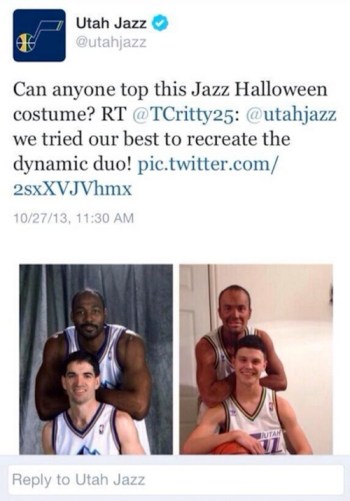 Consider this a follow up to Blackface is the New Black?
 The fact that I can read an article about offensive costumes and have people question why a guy dressed as a taco with a sombrero is considered offensive is insane to me. It brings home the point I’ve made time and time again that most people think that all Latinos are Mexican. Not only that, consider that the immigration debate and how Mexicans are viewed as “aliens” (something not human) in this country. Put it all together in your mind and realize that there’s a lack of respect for the culture.
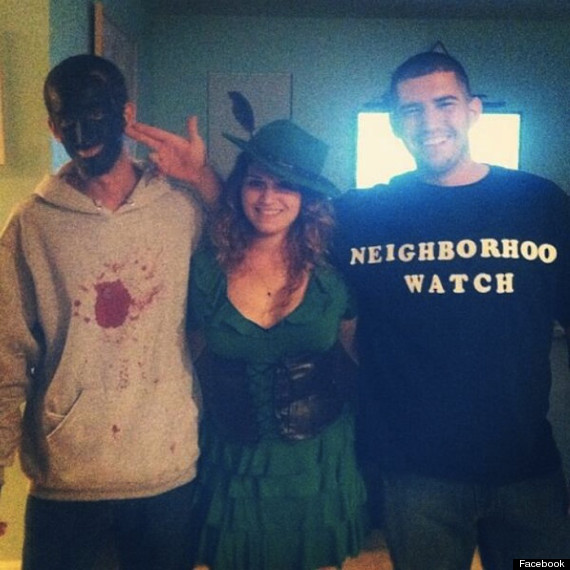 However, as I mentioned in the article above, maybe blackface and cultural insensitivity is something that has always happened and with the advent of the internet, we are just noticing it more and more. I suppose there are people in this country that have never seen a person of color up close. So there is very much this “alien” view of us. I’m pretty sure there are photo albums of a some suburban family that contains pictures of them in some sort of blackface because they liked The Cosby Show, or The Jefferson’s. I’m also willing to bet some serious money there are old photos of people attempting to look like Speedy Gonzalez.
 One thing is for sure is that there are a lot of freaks in NYC and I know that because I’m one of them.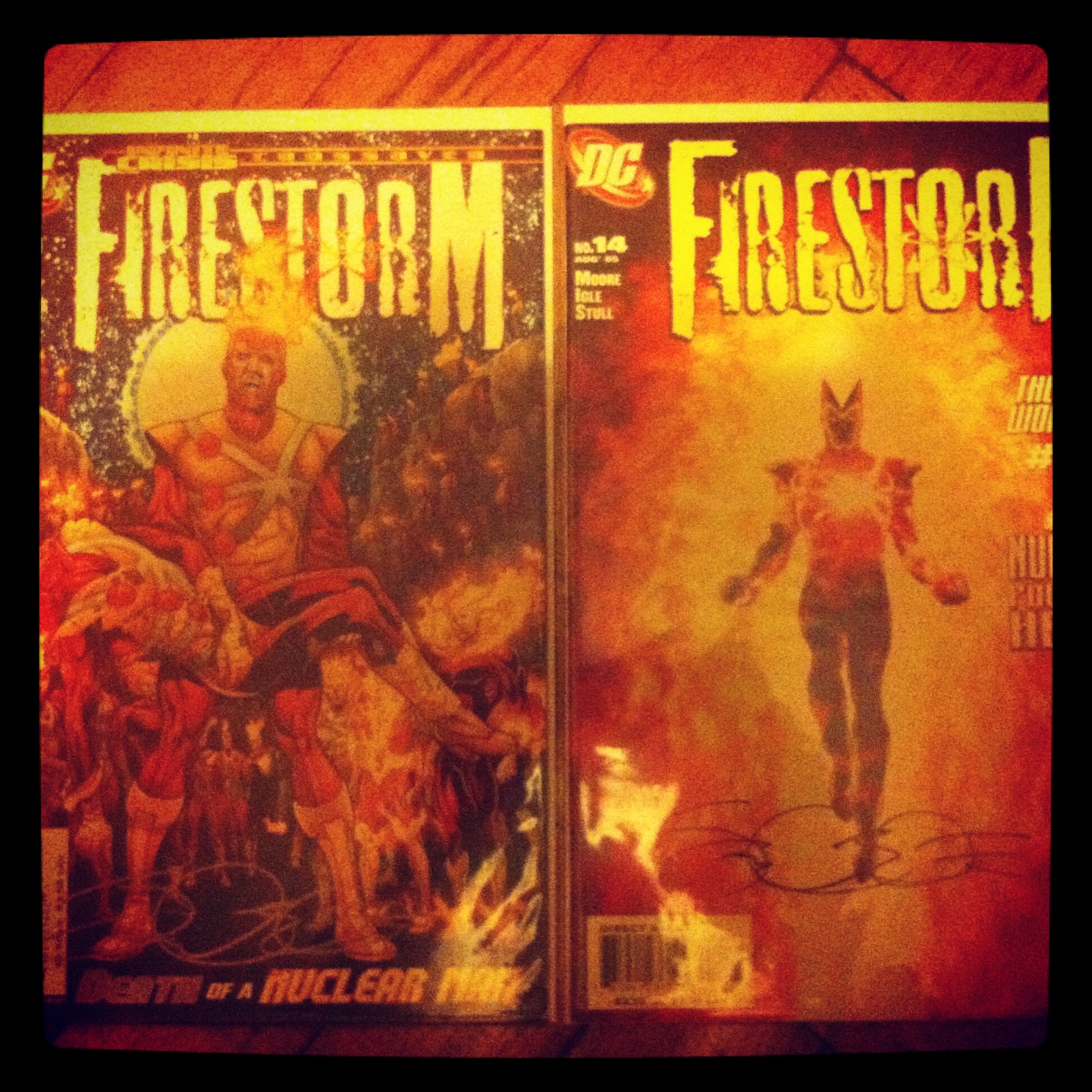





 Anthony Otero